Cardiovascular disease models

Cardiovascular disease models

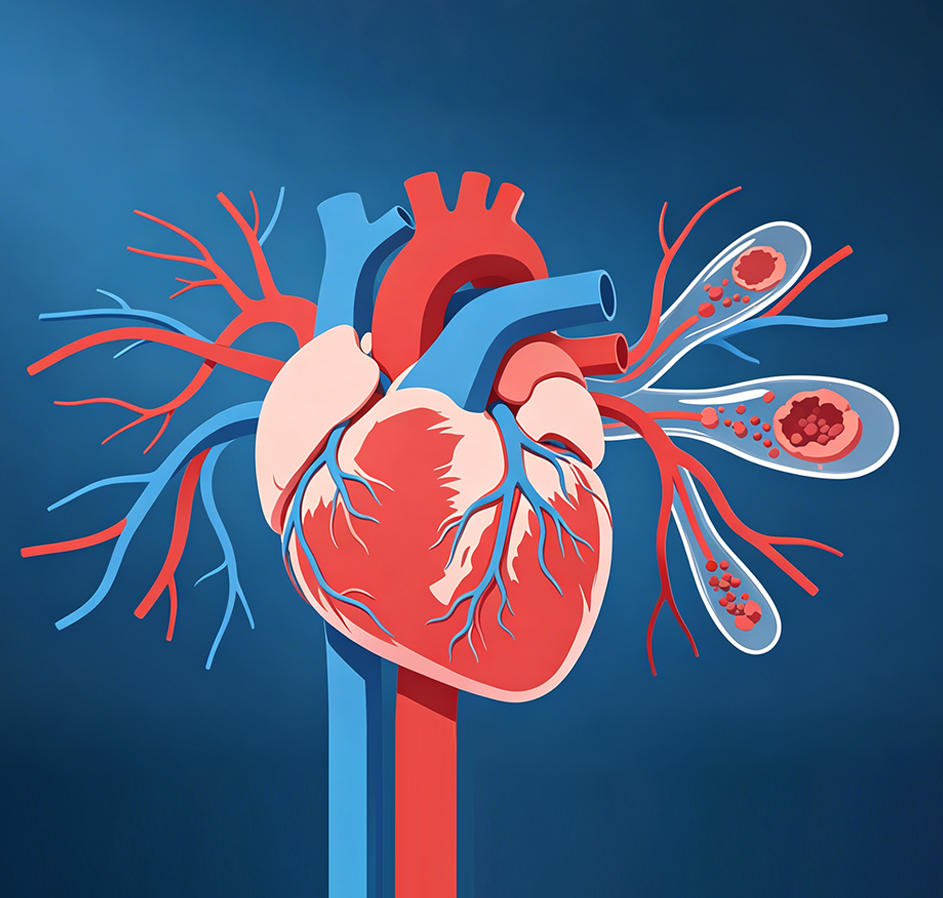
Cardiovascular diseases (CVD) has high incidence and mortality rates worldwide. Characterized by abnormalities in blood lipids, elevated levels of plasma cholesterol, particularly low-density lipoprotein cholesterol (LDL-c), cardiovascular diseases are one of the main risk factors for coronary heart disease (CHD). Cardiovascular diseases include atherosclerosis, heart failure, myocardial infarction, and hypertension, etc.

Details

1、Breaking the Bottleneck in Cardiovascular Drug R&D | Highly Predictive Animal Models Accelerate Preclinical Efficacy Validation

  • Industry Pain Poin:Traditional cardiovascular disease models feature low clinical translation rates and fail to accurately simulate human pathophysiological characteristics, leading to prolonged drug R&D cycles and high failure rates.
  • Value Proposition: Highly predictive animal models based on in-depth phenotypic analysis, combined with a multi-dimensional efficacy evaluation system, shorten the R&D cycle by 30% and reduce the risk of clinical failure.

2、Service Overview

  • The core challenge in cardiovascular disease drug R&D lies in the pathophysiological differences between animal models and human diseases. Traditional models are unable to replicate complex cardiovascular pathological features (e.g., myocardial ischemia-reperfusion injury, atherosclerotic plaque stability), resulting in insufficient predictability of preclinical data.
  • Jenniohas built a highly human-relevant preclinical platform for cardiovascular diseases through precision surgical models (e.g., LAD ligation-induced myocardial infarction) and genetically engineered models (e.g., spontaneously hypertensive rats), integrated with dynamic functional monitoring (echocardiography, hemodynamics) and molecular pathological verification, which provides pharmaceutical companies with full-chain data support from target validation to IND filing.

3、Our Services

  1. Ischemic Heart Disease Models
  • Myocardial Infarction Model: By ligating the left anterior descending coronary artery (LAD) in SD rats through thoracotomy, myocardial ischemia/reperfusion injury is mimicked, thereby evaluating the effects of drugs on infarct size, cardiac function (LVEF), and myocardial fibrosis.
  • Endpoint Indicators: Electrocardiogram (ECG), serum markers (cTnI), histopathology (Masson’s staining), echocardiography.
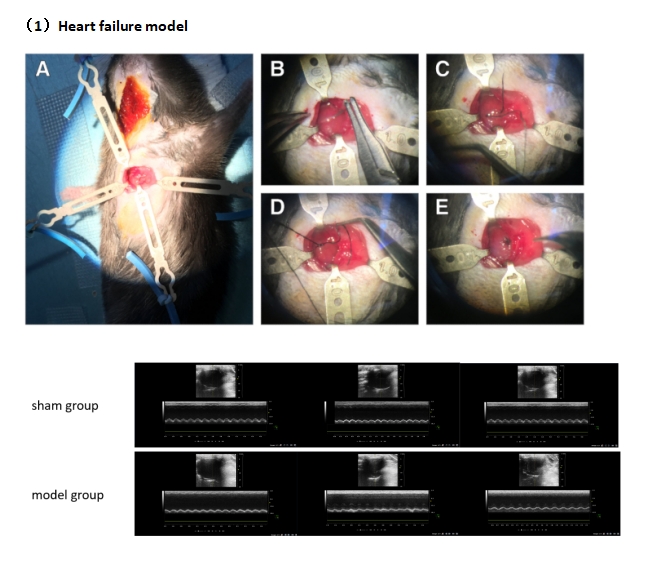
  1. Heart Failure Models
  • Pressure Overload Model: Aortic constriction (TAC) to induce heart failure, for assessing the improvement effects of drugs on ventricular remodeling, BNP levels and survival rate.
  • Metabolic Heart Failure Model: High-fat diet combined with STZ induction to establish diabetic cardiomyopathy in db/db mice, for detecting fasting blood glucose, insulin resistance and myocardial lipid deposition.
  1. Infectious Cardiovascular Disease Models
  • Endocarditis Model:Intravenous injection of Staphylococcus aureus (3×10⁵ CFU) in rats after cardiac intubation to simulate acute infective endocarditis, for evaluating the efficacy of antibiotics or anti-inflammatory drugs on bacterial load and valvular damage.
  • Detection Indicators: Blood culture colony count, tissue HE staining, inflammatory factors (IL-6, TNF-α)

4、Technology Platforms and Advantages

Technology Platforms

  • High-precision Surgical Modeling:Microsurgical techniques ensure a success rate of over 95% for LAD ligation/aortic constriction and a postoperative survival rate of ≥90%.
  • Dynamic Functional Monitoring: Small animal ultrasound (Vevo® 3100) for real-time tracking of cardiac function changes; small animal blood pressure monitoring system for continuous in vivo blood pressure monitoring.
  • Multi-omics Analysis: Transcriptome sequencing and proteomics of myocardial tissue (e.g., cardiac troponin pathway) to reveal the mechanism of drug action.

Differentiated Advantages

  • Clinical Relevance of Models:Pathological features (fibrosis, inflammatory infiltration) of the myocardial infarction model are highly consistent with human acute myocardial infarction (AMI).
  • One-stop Efficacy Evaluation:Integration of hemodynamics, imaging, molecular pathology and survival analysis, outputting FDA/EMA-compatible data reports.

5、Service Process

  • Demand Alignment (1 working day): Customization of protocols (model selection, administration route, endpoint indicators).
  • Model Construction and Drug Administration (4-8 weeks):Surgical modeling in SPF animal facility and GLP-aligned drug administration management.
  • Real-time Data Synchronization: Exclusive online platform for sharing ultrasound images, behavioral videos and raw data.
  • Report Delivery (2 weeks):Final report including statistical analysis, histopathological atlas and mechanism interpretation.

6、Quality Control and Compliance

  • Standard Adherence: Experimental operations comply with AAALAC welfare standards, and data management meets the recording requirements of relevant declaration criteria.
  • Quality Control Nodes:SOP video review for surgical operations; double-blind scoring for histopathology; three-level audit of raw data.
  • Facility Certification: SPF animal facility (GB 14925-2010), ISO 9001 quality management system.

7、Case Studies

Project Name: Efficacy Validation of an Anti-fibrotic Drug in a Myocardial Infarction Model

  • Model: LAD ligation in SD rats (n=10/group)
  • Intervention: Candidate drug vs. positive control (Captopril), administered for 4 weeks
  • Results:
    • 38% reduction in infarct size in the drug group (p<0.01), 50% increase in LVEF (vs. model group); 20% decrease in LVEDD (vs. model group); 30% decrease in LVESD.
    • Left: Extensive blue-stained fibrosis in the model group; Right: Significant reduction in fibrosis in the drug group.

8、Cooperation Advantages

  • Full-cycle Support:
    • From model customization to the compilation of declaration materials.
  • Efficient Delivery:
    • Streamlined delivery schedule, with urgent projects launched within 2 weeks.
  • Cost Optimization:
    • Shared model library resources, reducing animal costs for single projects by 30%.

9、FAQ

  • Q: Are non-human primate cardiovascular models supported?
  • A: Currently, rat, mouse and rabbit models (e.g., hypercholesterolemic rabbits) are available; non-human primate models require custom development.
  • Q: Can in vitro drug screening with cardiac organoids be integrated?
  • A: Yes! We can connect with the 3D myocardial organoid platform for lead compound primary screening (protocol available upon separate inquiry).

10、Laboratory Highlights

  • Core Equipment:
    • Small animal ventilator, stereotaxic apparatus, stereomicroscope, high-frequency electrocautery, ensuring microsurgical precision and animal welfare.
  • Detection Platforms:
      • Small animal echocardiography, small animal blood pressure monitoring system, small animal ECG, small animal PET-CT (molecular imaging), Luminex multiplex cytokine assay (inflammatory pathway analysis).

11Contact Us

Get a Customized Proposal Now

  • Email: 3691125803@qq.com
  • Tel: +86 18802035152

Resource Download

  • Technical Manual for Cardiovascular Disease Models
  • SOP for Myocardial Infarction Model Construction


Listen to the voice of every customer

Share details of your inquiry, and we’ll contact you shortly.​

Contact us

Room 238, Building A, Guangzheng Science and Technology Park, No. 11 Nanyunwu Road, Huangpu District, Guangzhou, Guangdong Province, China

Business Cooperation

3691125803@qq.com

Mobile phone number/WeChat ID

+86 18802035152