Inflammation and Autoimmune Disease Models

Inflammation and Autoimmune Disease Models

Inflammation is a physiological response process of the immune system to injury and infection. During this process, signals are sent to immune cells to promote the healing and repair of damaged tissues and protect the body from infectious factors such as viruses and bacteria. However, prolonged or excessive activation of inflammation can also be detrimental to the body and lead to pathogenicity.

Details

1、Overcoming Bottlenecks in Inflammatory and Autoimmune Drug R&D: Customized In Vivo Efficacy Platform Accelerates Preclinical Translation

  • Industry Pain PointTraditional disease models suffer from poor consistency control and inability to recapitulate the human immune microenvironment, leading to significant deviations in efficacy prediction and a high clinical failure rate.
  • Core Value Proposition: Leveraging high-fidelity disease models and a multi-dimensional evaluation system, we deliver accurate and efficient in vivo efficacy data, shortening R&D cycles by 30% and reducing clinical risks.

2、Service Overview

Drug development for inflammatory and autoimmune diseases is confronted with core challenges including high pathological complexity, substantial species differences and low translation efficiency. Jennio Bio focuses on preclinical efficacy evaluation, and provides pharmaceutical enterprises with the following solutions through animal models that highly mimic human diseases (e.g., rheumatoid arthritis, psoriasis, inflammatory bowel disease) and standardized detection systems:

  1. Predictive disease models: Maximally recapitulate the disease microenvironment and enhance the clinical relevance of efficacy data.
  2. One-stop solutions: Covering efficacy, mechanism and safety assessment from model establishment to multi-dimensional index analysis.
  3. Accelerated decision-making: Shortening the cycle of candidate drugs from screening to IND filing.

3、Core Services

3.1.Disease Modeling and Efficacy Evaluation

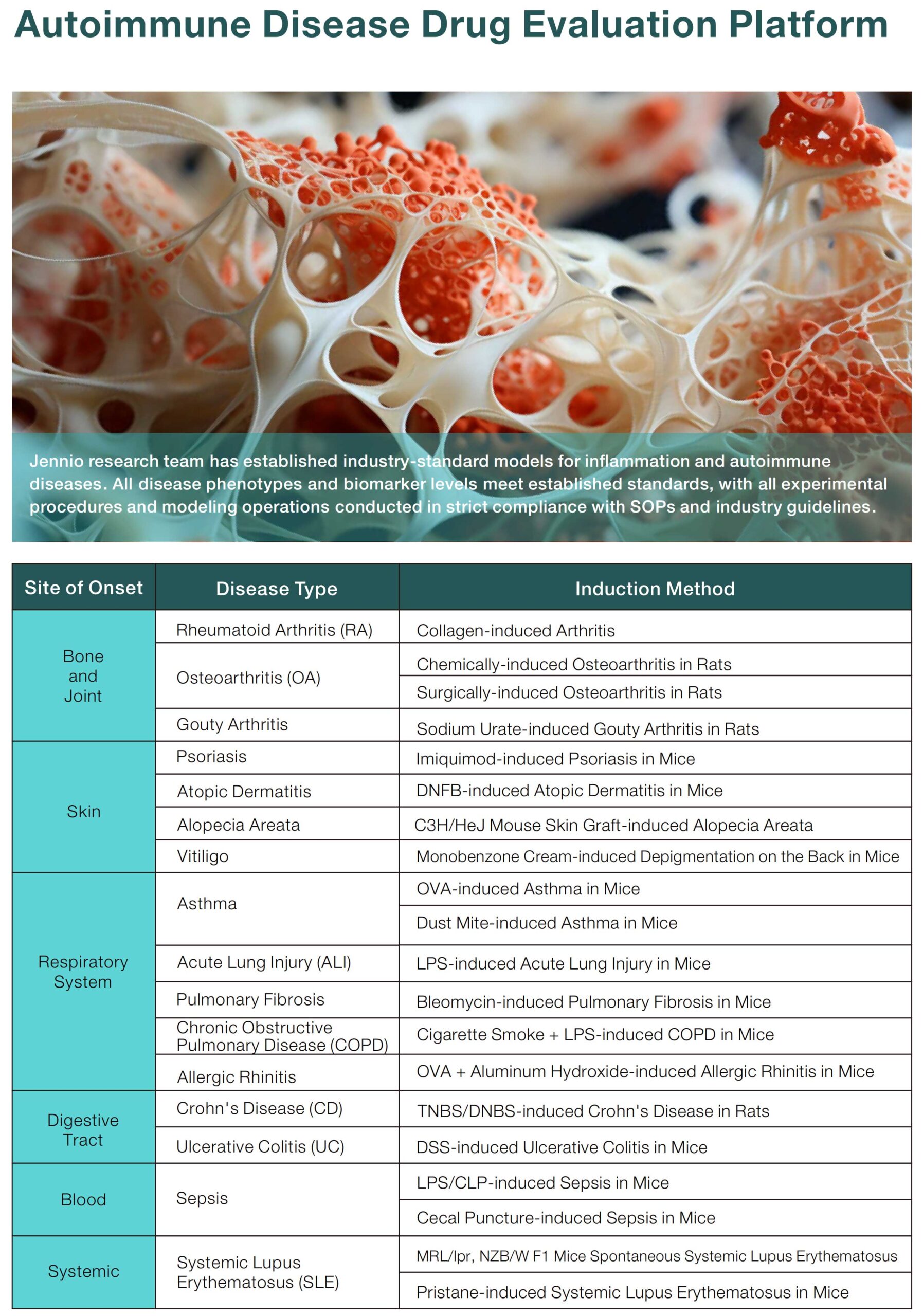
Disease TypeModel SystemKey Detection Indicators
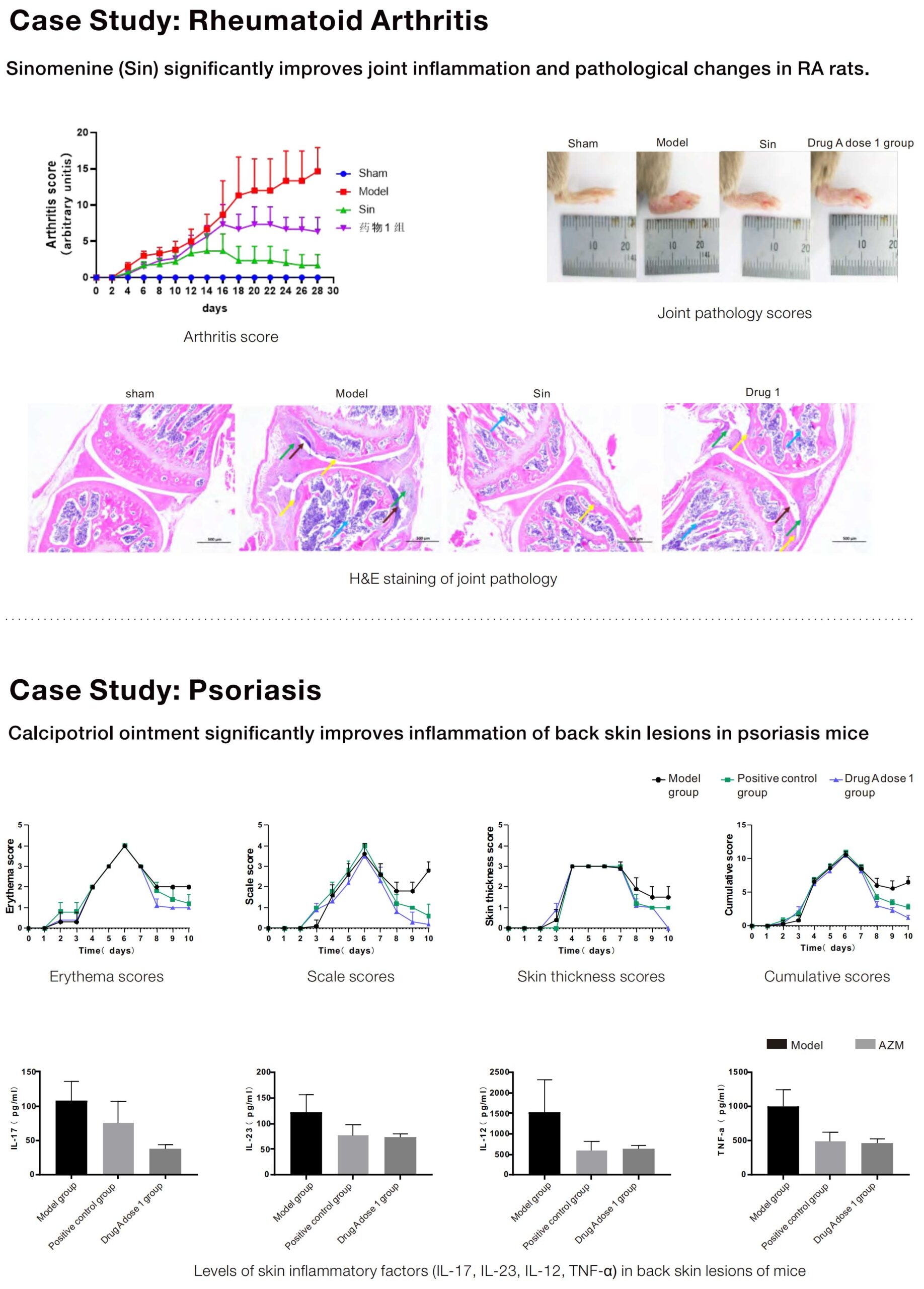
Rheumatoid ArthritisCollagen-Induced Arthritis (CIA) Mouse ModelArthritis score, joint swelling score, ELISA for inflammatory factors (TNF-α, IL-1β, IL-6), joint histopathological analysis
PsoriasisImiquimod-Induced Psoriasis Mouse ModelPASI score, skin thickness, epidermal hyperplasia, immune cell infiltration (HE/IHC)
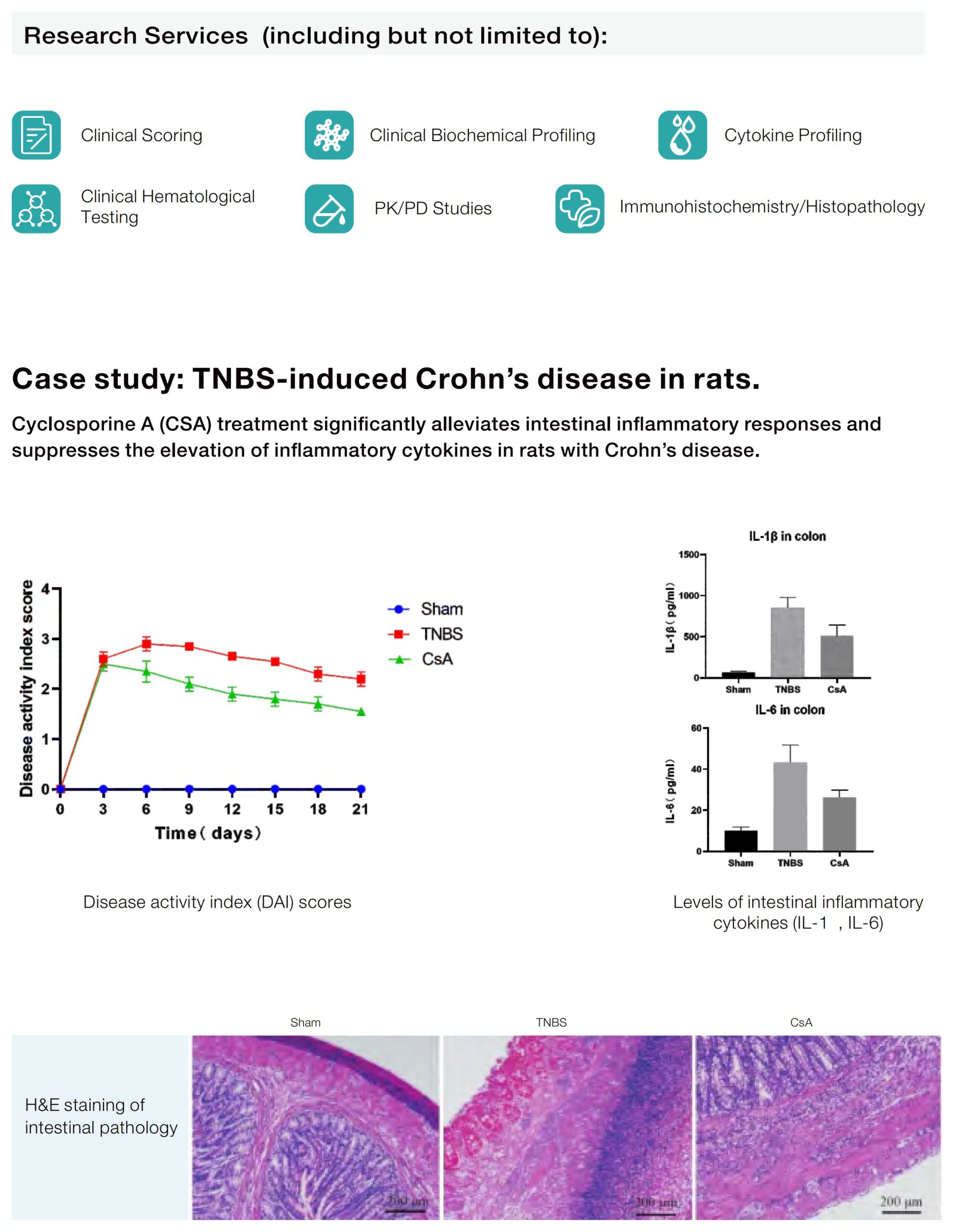
Inflammatory Bowel DiseaseDSS/TNBS-Induced Colitis ModelDisease Activity Index (DAI), colon length, tissue damage score, goblet cell loss
Systemic Lupus ErythematosusPristane-Induced Model / MRL/Lpr Spontaneous ModelUrine protein, splenomegaly, anti-dsDNA antibody, glomerulonephritis pathological score

3.2. Multi-Dimensional Efficacy Evaluation System

  • Function-related indicators: Body weight changes, disease scores (skin lesions, swelling, behavioral indicators, etc.), organ index.
  • Molecular mechanisms: Inflammatory factor profiling (Luminex multiplex assay), flow cytometric analysis of immune cells (Th17/Treg ratio).
  • Histopathology: Hematoxylin-Eosin (HE) staining, Masson staining, Immunohistochemistry (IHC), Immunofluorescence (IF).
  • Long-term efficacy: Survival rate monitoring, recurrent model evaluation.

4、Technology Platforms and Advantages

4.1. Core Technology Platforms

  • High-fidelity animal model library: Over 50 well-validated mouse/rat disease models (e.g., DBA/1 mouse rheumatoid arthritis model, Balb/c allergic rhinitis model).
  • Precision detection platform:
  • Flow Cytometry (CytoFLEX Platform): Multicolor immune cell phenotyping.
  • High-throughput cytokine detection: Quantitative analysis of inflammatory factors.
  • Digital pathology analysis: Quantitative analysis of tissue sections.

4.2. Differentiated Advantages

  • Model stability: Psoriasis model induction rate > 95%; consistent DAI scores in Crohn’s disease model mice.
  • Cross-species validation: Support for humanized immune system mouse models to evaluate the efficacy of human-specific antibodies.
  • Rapid response: Turnaround time for standard models is 4-6 weeks, and expedited projects can be shortened to 3 weeks.

5、Service Process

  1. Needs Alignment (1-3 days): Customize experimental protocols, and confirm model selection, group design and detection indicators.
  2. Model Initiation (Week 1): Animal grouping, model induction and drug administration.
  3. Dynamic Monitoring (Weeks 2-4): Real-time sharing of body weight, behavioral and imaging data (monitoring changes in animal status in real time).
  4. Endpoint Analysis (Weeks 5-6): Sample collection, molecular detection and pathological analysis.
  5. Report Delivery (Week 7): Provision of GLP-aligned reports (raw data + statistical analysis + interpretive recommendations).

6、Quality Control and Compliance

  • Compliance with standards: Experimental operations adhere to AAALAC animal welfare guidelines and the ISO 9001 quality management system.
  • Data traceability: Full tracking via an Electronic Lab Notebook (ELN) system to ensure complete and auditable data.
  • Quality control checkpoints:
  • Model validation: Strict inclusion of negative/positive control groups.
  • Double-blind sample testing: Key indicators (e.g., ELISA) are independently reviewed by two technicians.

7、Case Studies

Case 1: JAK Inhibitor for the Treatment of Rheumatoid Arthritis

  • Model: Collagen-Induced Arthritis (CIA) in C57BL/6 mice
  • Results:
  • 62% reduction in arthritis score in the treatment group vs. the model group, and 70% decrease in inflammatory cell infiltration in joint tissues (HE staining).
  • 85% reduction in serum IL-6 levels (Luminex assay).

Case 2: IL-23 Antibody for the Treatment of Psoriasis
  • Model: Imiquimod-induced psoriasis in BALB/c mice
  • Results:
    • 75% improvement in skin lesion scores, and epidermal thickness recovered to 80% of the normal level (histological analysis).
    • Significant reduction in the levels of psoriasis-associated inflammatory factors in skin tissues (IL-17, IL-23, IL-12, TNF-α) vs. the model group (P < 0.05).

8、Collaboration Advantages

  • Full-cycle support: Integrated services for pharmacology, toxicology and pharmacokinetics/pharmacodynamics (PK/PD) from target validation to IND filing.
  • Cost optimization: Standardized platforms reduce single-project costs by 30%, with flexible installment payment options available.
  • Global compliance experience: Cumulatively assisted clients in completing more than 10 China-US dual-filing projects.

9、Lab Highlights

Core FacilitiesFunctional Value
SPF Animal Facility (5,000 cage capacity)Supports large-scale efficacy cohort studies and eliminates microbial interference
Small Animal In Vivo Imaging System (IVIS)Real-time monitoring of fluorescently labeled drug distribution and target organ accumulation
Automated Pathological Section ScannerHigh-definition digital sections enable remote collaborative diagnosis
Fluorescence-Activated Cell Sorter (FACS Aria)High-purity immune cell sorting for mechanistic research

10、Contact Us

Get a customized solution now:

Tel: +86 18802035152

Email: 3691125803@qq.com

Listen to the voice of every customer

Share details of your inquiry, and we’ll contact you shortly.​

Contact us

Room 238, Building A, Guangzheng Science and Technology Park, No. 11 Nanyunwu Road, Huangpu District, Guangzhou, Guangdong Province, China

Business Cooperation

3691125803@qq.com

Mobile phone number/WeChat ID

+86 18802035152