With high standard experimental environment and high-level instrument facilities. We can conduct pharmacological efficacy research, safety assessment of inhalation formulations, and effectiveness evaluation of special drugs.
Low Efficiency in Inhalation Drug Development and Challenges in In Vivo Evaluation? Our One-stop Inhalation Therapy Evaluation Platform Accelerates Preclinical Translation
Industry Pain Point: Traditional inhalation drug development faces bottlenecks such as low delivery efficiency, poor in vivo targeting, and inadequate efficacy assessment systems.
Value Proposition: Leveraging customized nanocarrier analysis, biomimetic lung models, and multi-species efficacy evaluation systems, we provide an end-to-end solution from formulation characterization to in vitro/in vivo efficacy assessment, shortening the R&D cycle by over 30%.
2、Service Overview
Inhalation therapy serves as a core strategy for treating respiratory diseases (such as asthma, COPD, and pulmonary infections) and for targeted drug delivery in systemic diseases. However, it faces three major industry challenges:
Delivery Efficiency Bottleneck: Traditional nebulized formulations have uncontrollable particle sizes, with lung deposition rates below 40%.
Clinical Translation Gap: Animal models cannot replicate human respiratory dynamics, leading to distorted preclinical data.
Limited Evaluation Dimensions: There is a lack of an integrated multi-scale efficacy-pharmacokinetic-toxicity assessment system.
The Jennio Inhalation Therapy Platform addresses these through a bionic respiratory model + precise nano-formulation control + multimodal efficacy evaluation, achieving:
✅ Over 50% improvement in delivery efficiency
✅ 90% clinical correlation
✅ One-stop generation of IND submission data packages
3、Our Services
1 Inhalation Formulation Development and Characterization
Multimodal Efficacy Evaluation: Small animal pulmonary function system (FlexiVent), micro-CT lung 3D reconstruction.
Differentiated Advantages
Exclusive full-chain integration of “Formulation-Model-Evaluation”: One-stop delivery from nanocarrier design to preclinical report.
Highly Predictive Model Library: Covering 20+ types of animal models including humanized asthma models and chronic airway disease models.
48-hour Rapid Response: Average turnaround time is 30% faster than the industry average, with support for rush projects.
5、Service Process ( GLP-aligned Standard)
Requirement Assessment: Customized proposal (including model selection and assay panel design) is delivered within 24 hours.
Study Execution: Real time progress monitoring through a dedicated online dashboard, with key steps documented by video.
Data Delivery: A comprehensive report in compliance with FDA/EMA formats (including raw data and statistical analysis).
Note: All operations are fully aligned with GLP principles, though GLP certification has not yet been obtained.
6、Quality Control and Compliance
Data Traceability: Electronic Lab Notebook (ELN) system + two person review mechanism.
Equipment Calibration: ISO 17025 accredited instruments (e.g., particle sizer, mass spectrometer).
Sample Management: Barcode tracking system with temperature controlled shipping (2–8°C / –80°C).
7、Case Studies
Project Name: Preclinical Evaluation of Inhaled IL-4Rα Antibody for Asthma Treatment.
Customer Pain Points: Insufficient systemic exposure with conventional subcutaneous injection; pulmonary local concentration is only 1/10 of plasma concentration.
Solutions:
LNP-encapsulated antibody (particle size optimized to 150 nm).
OVA-induced asthmatic mouse model + aerosol administration.
Results:
8-fold increase in pulmonary drug accumulation.
62% reduction in airway resistance (vs. subcutaneous injection group).
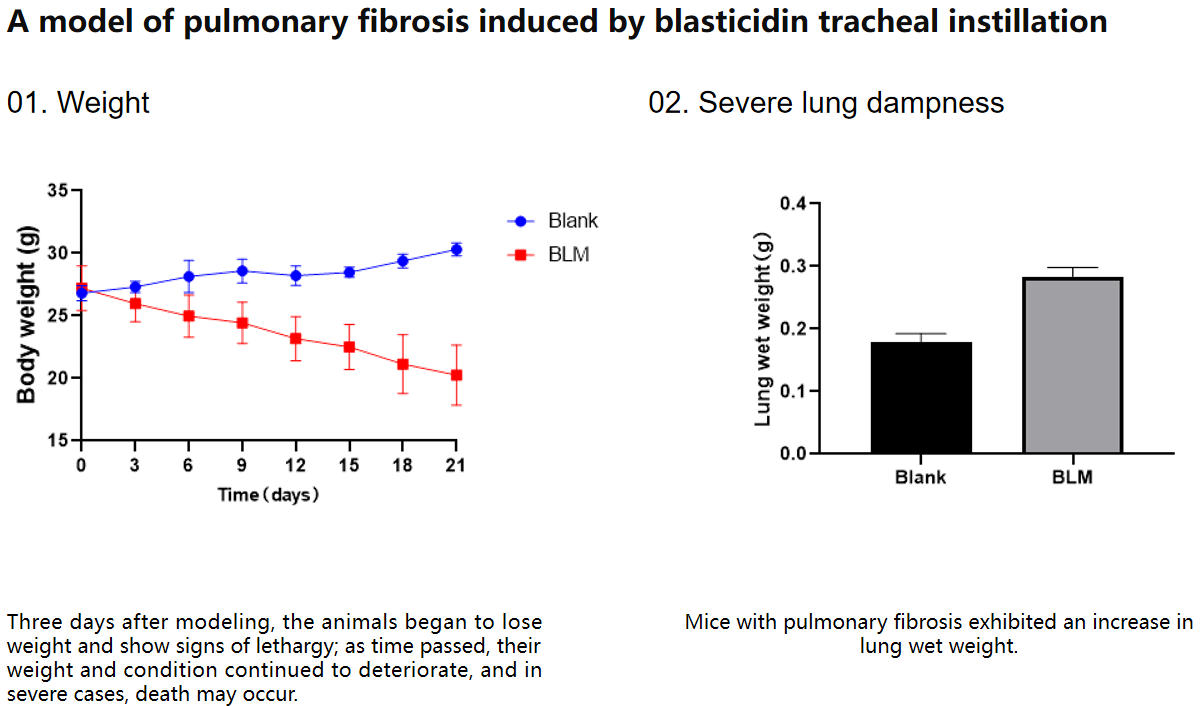
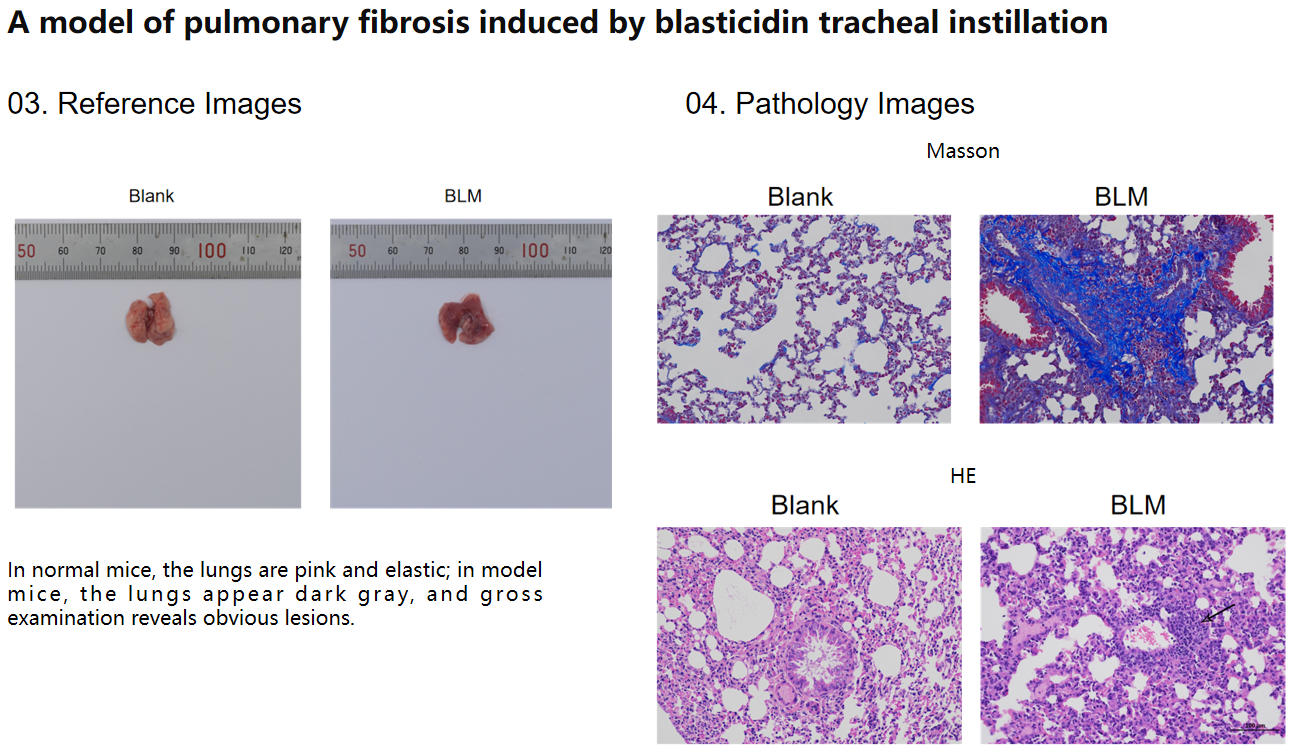
A model of pulmonary fibrosis induced by blasticidin trachealinstillation
1. Laboratory Animals
C57BL/6 mice, male, 8 weeks old
2. Molding Reagents
Blastoomycin (either blastoomycin sulfate or blastoomycin hydrochloride)
3. Modeling Methods
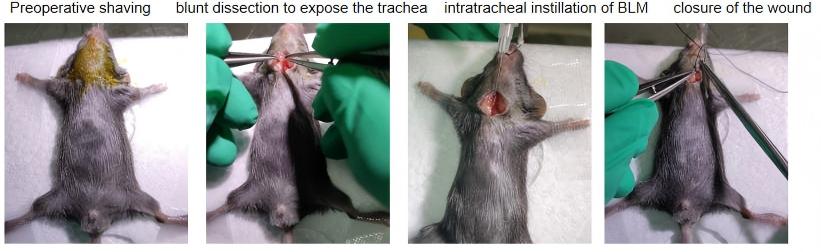
After anesthetizing the mice with a 2.5% solution of alfentanil (10 g/g) via intraperitoneal injection, make an incisionalong the midine of the neck (approximately 0.5-0.7 cm in length). Use ophthalmic forceps to gently dissect the musclesand expose the trachea. Using an insulin syringe, insert it into the trachea at a 30° angle and inject a bleomycin solution (5mg/kg) into the trachea at a dose of 50 ul per animal After injection, suspend the animal and rotate it to ensure evendistribution of the drug within the lung tissue. Close the incision layer by layer with sutures. Once the animal has regainedconsciousness, return it to its cage for normal housing.
4. Modeling Procedures
8、Collaboration Advantages
Core Value
Jennio Solution
Full-cycle Support
From lead compound screening to IND submission material generation
Cost Control
Modular service portfolio, flexibly adapted to R&D budgets
Global Compliance
Reports meet FDA/EMA/NMPA submission requirements
9、FAQ
Q1:Do you support the evaluation of inhaled nucleic acid drugs (e.g., mRNA vaccines)?
Yes! We have completed an siRNA pulmonary fibrosis project. The in vitro mRNA transfection efficiency after nebulization reached 70%.
Q2:Can you provide a predictive model for human lung permeability?
Our exclusive biomimetic alveolar-capillary barrier model enables the simulation of drug transmembrane transport rate (correlation R² > 0.85).
10、Laboratory Highlights
Ultra-clean Nebulized Formulation Workshop: Class 10,000 cleanroom grade, supports the preparation of sterile nanoliposomes / exosomes.
Small Animal Pulmonary Function Meter: Capable of simultaneously monitoring 16 parameters including airway resistance, compliance, and elastic resistance.
Download Inhaled Drug Development Technical White Paper
Apply for Free Model Validation Service
Product Details
Product Details
With high standard experimental environment and high-level instrument facilities. We can conduct pharmacological efficacy research, safety assessment of inhalation formulations, and effectiveness evaluation of special drugs.
Listen to the voice of every customer
Share details of your inquiry, and we’ll contact you shortly.
Contact us
Room 238, Building A, Guangzheng Science and Technology Park, No. 11 Nanyunwu Road, Huangpu District, Guangzhou, Guangdong Province, China