1、Breaking Through Liver Disease Drug R&D Bottlenecks: One-Stop High-Fidelity Model Platform Accelerates Preclinical Efficacy Translation
Addressing the core pain points of low clinical relevance and inadequate model predictability in liver disease drug development, we provide standardized models highly simulating the pathological characteristics of human diseases and a comprehensive efficacy evaluation system, shortening the R&D cycle by over 30% and reducing clinical failure risks.
2、Service Overview
Liver disease drug development faces industry challenges including low clinical conversion rates and the disconnect between animal models and human pathology. Based on our independently developed high-fidelity liver disease model platform, we provide pharmaceutical companies with a one-stop solution from target validation to preclinical efficacy evaluation by accurately simulating the progression characteristics of human fatty liver, liver fibrosis, liver cancer, and other liver-related diseases. We focus on three core objectives—pathological fidelity, data reproducibility, and clinical relevance—to empower pharmaceutical companies to overcome R&D bottlenecks.
3、Our Services
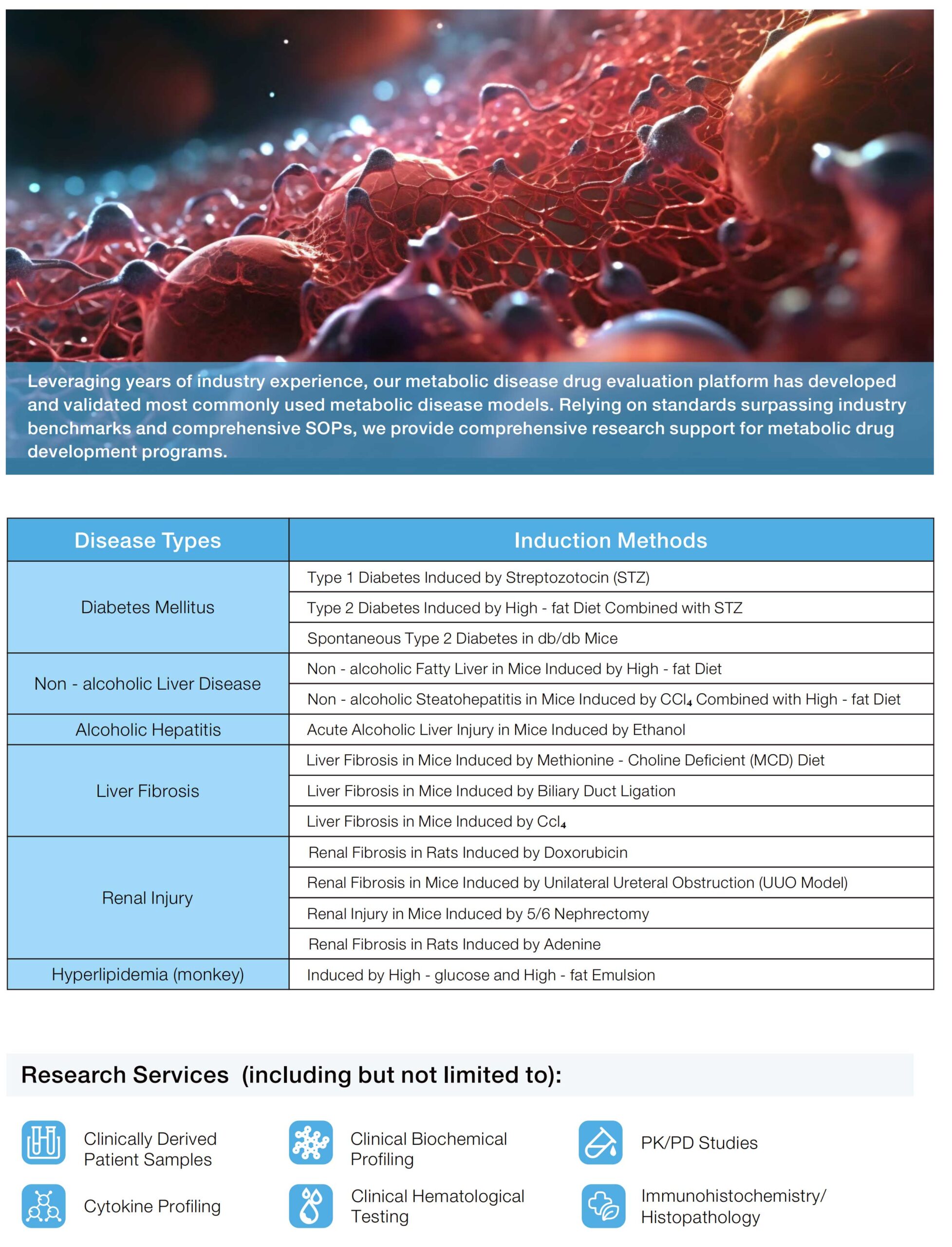
Liver Disease Model Establishment and Validation
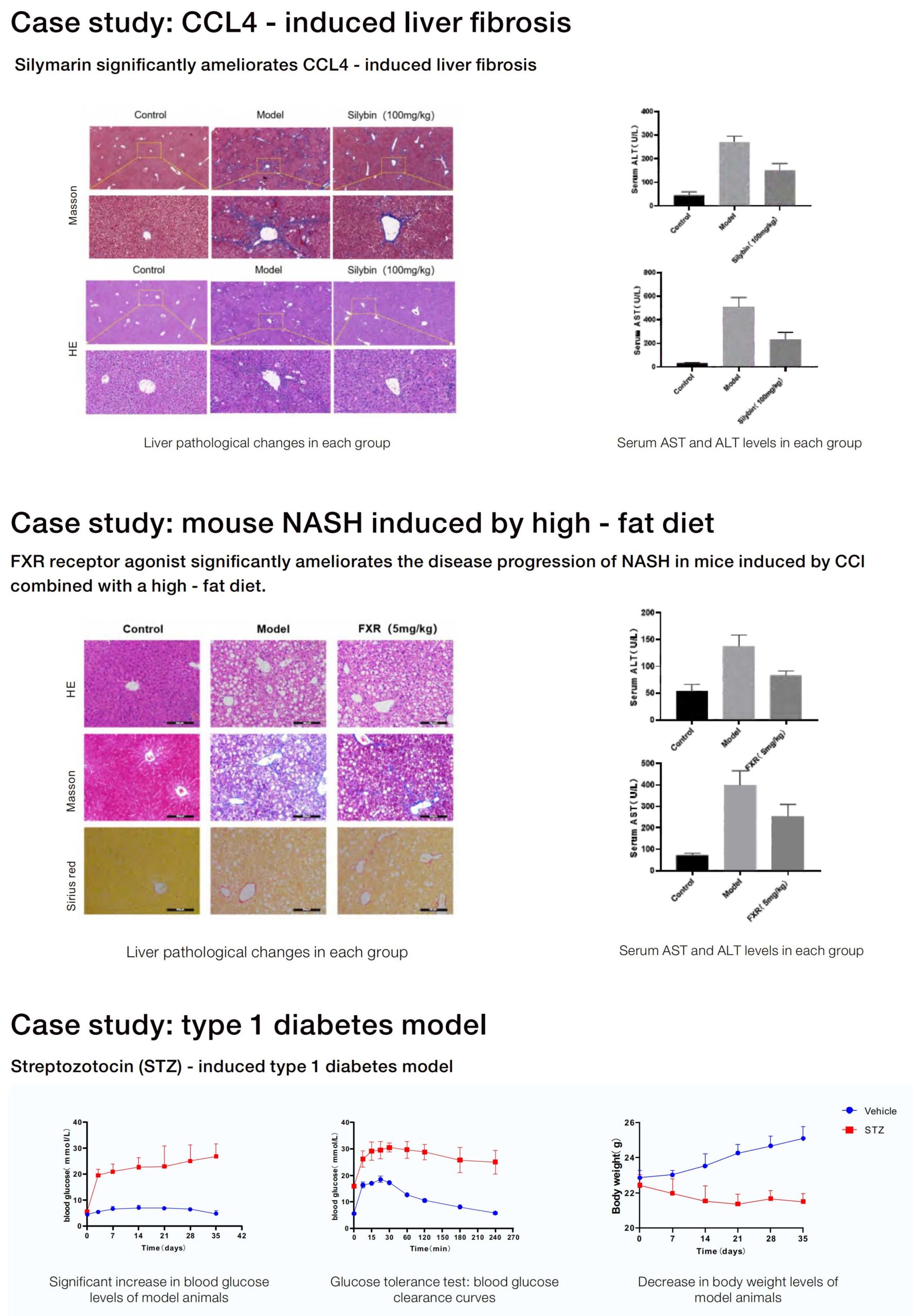
Non-alcoholic Steatohepatitis (NASH) Model: Induction of C57BL/6 mice with a high-fat diet for 16 weeks recapitulated hepatic steatosis, inflammatory infiltration, and necrosis (confirmed by HE staining).
Liver Fibrosis Model: SD rats treated with intraperitoneal CCl₄ injection for 8 weeks, significantly increasing AST/ALT levels with pathological evidence of typical fibrotic changes.
Liver Cirrhosis Model: SD rats induced by CCl₄ combined with ethanol-containing drinking water, characterized by pseudo lobule formation and vascular abnormalities.
Orthotopic Hepatocellular Carcinoma (HCC) Models:
Cell Line-derived Xenograft (CDX) Model: Orthotopic transplantation of HepG2-luc cells into nude mice, enabling real-time tumor burden monitoring via in vivo imaging.
Patient-derived Xenograft (PDX) Model: Transplantation of human HCC tissues into NCG mice, preserving original tumor biological characteristics with a passage stability >95%.
Primary HCC Model: Multifocal liver tumors constructed by hydrodynamic injection, simulating clinical features with high heterogeneity.
Chronic Hepatitis B (CHB) Model: Mice infected with rAAV-1.3HBV vector, stably expressing viral markers (HBsAg, HBV DNA, HBeAg, etc.) for over 40 weeks.
Imaging monitoring: Small animal ultrasound/CT for evaluating liver morphological changes, and in vivo imaging for tracking tumor progression.
Histopathology: HE/Masson staining for quantitative analysis of fibrosis area, and immunohistochemistry for detecting target expression.
Molecular biomarkers: Stable detection of serum HBV-related indicators (HBV model), detection of inflammatory factors (TNF-α/IL-6), and liver fibrosis indicators (HA/LN).
Characteristic Application Scenarios
Antiviral drug evaluation: rAAV-HBV model for assessing the inhibitory effect of nucleoside analogs on serum antigens.
Anticancer drug screening: In vivo drug sensitivity testing of PDX models (e.g., oxaliplatin combination regimens).
Combined treatment strategies: Electroacupuncture combined with stem cells for liver injury repair.
4、Technology Platforms and Advantages
Core Platforms
Precision Model Construction Platform:
Successfully developed over 50 liver disease models (NASH/hepatic fibrosis/liver cancer, etc.) with pathological consistency > 90%.
PDX models achieve 100% STR locus consistency, eliminating cross-contamination.
Multimodal Detection Platform:
Equipped with in vivo imaging systems, small animal CT, and flow cytometers, supporting dynamic efficacy monitoring.
High-throughput biochemical analysis system (daily throughput > 500 samples for indicators such as four blood lipid items, three bilirubin items, HBV serological markers, and ALT/AST).
BSL-2 Laboratory: Supporting viral model (HBV) and infectious disease research.
Cell Bank: Cover 100+ primary hepatocellular carcinoma cell samples from Asian patients, enabling in vitro preliminary efficacy screening.
Differentiated Advantages
The only platform integrating three types of liver cancer models (CDX/PDX/primary), covering the full-cycle needs of drug development.
Direct clinical sample-to-PDX pathway: In collaboration with Grade A tertiary hospitals, sample transplantation is completed within 48 hours with a survival rate > 80%.
Cross-validation of key data by third-party institutions (e.g., PDX model STR testing).
7、Case Studies
Case 1: NASH Drug Evaluation
Model: C57BL/6 mice induced by high-fat diet for 8 weeks combined with CCl₄ induction.
Results: The test article significantly reduced hepatic steatosis (Oil Red O staining) and hepatic inflammation (HE staining, Masson staining), with ALT decreased by 40% (vs model group).
Case 2: Liver Cancer PDX Drug Sensitivity Testing
Model: Patient-derived PDX (F2 generation) of liver cancer.
Results: The oxaliplatin + 5-Fu regimen achieved a tumor inhibition rate of 78% (T/C value: 22%), significantly superior to the single-agent group.
8、Collaboration Advantages
Full-cycle Support: From target validation to IND filing, providing integrated pharmacology and toxicology (Non-GLP) services.
Efficient Delivery: Model establishment cycle is 30% faster than the industry average (PDX model establishment takes only 8-10 weeks).
Cost Optimization: Shared database of over 1,000 models, reducing the cost of individual trials by 20%.
9、FAQ
Q: How is the passage stability of PDX models ensured?
A: STR testing for each passage ensures genetic consistency, with a complete locus report provided.
Q:Does the data support international regulatory filings?
A: Reports comply with FDA/EMA formatting requirements, with an English version and raw data package provided.
10、Laboratory Highlights
5,000-cage capacity with independent operation rooms equipped with in vivo imaging systems.
QPCR/WB/flow cytometers, supporting daily testing of over 100 samples.