Jennio Biotech provides preclinical metabolic disease animal models in mice and rats for obesity, type 2 diabetes, NASH, and liver fibrosis. Our in vivo models support study design, efficacy evaluation, pathology, biochemical analysis, and imaging endpoints for translational drug discovery.
Key Challenges in Metabolic Disease Drug Development
Preclinical research in obesity, diabetes, NASH, and liver fibrosis often faces translational and model-selection challenges that can delay candidate evaluation and reduce study predictability.
Traditional animal models may not fully reflect the complexity of human metabolic disease progression.
Single-endpoint studies can make it difficult to evaluate efficacy across metabolism, pathology, and fibrosis-related changes.
Drug developers need more reliable in vivo models and integrated readouts to improve preclinical decision-making.
Metabolic Disease Animal Model Services
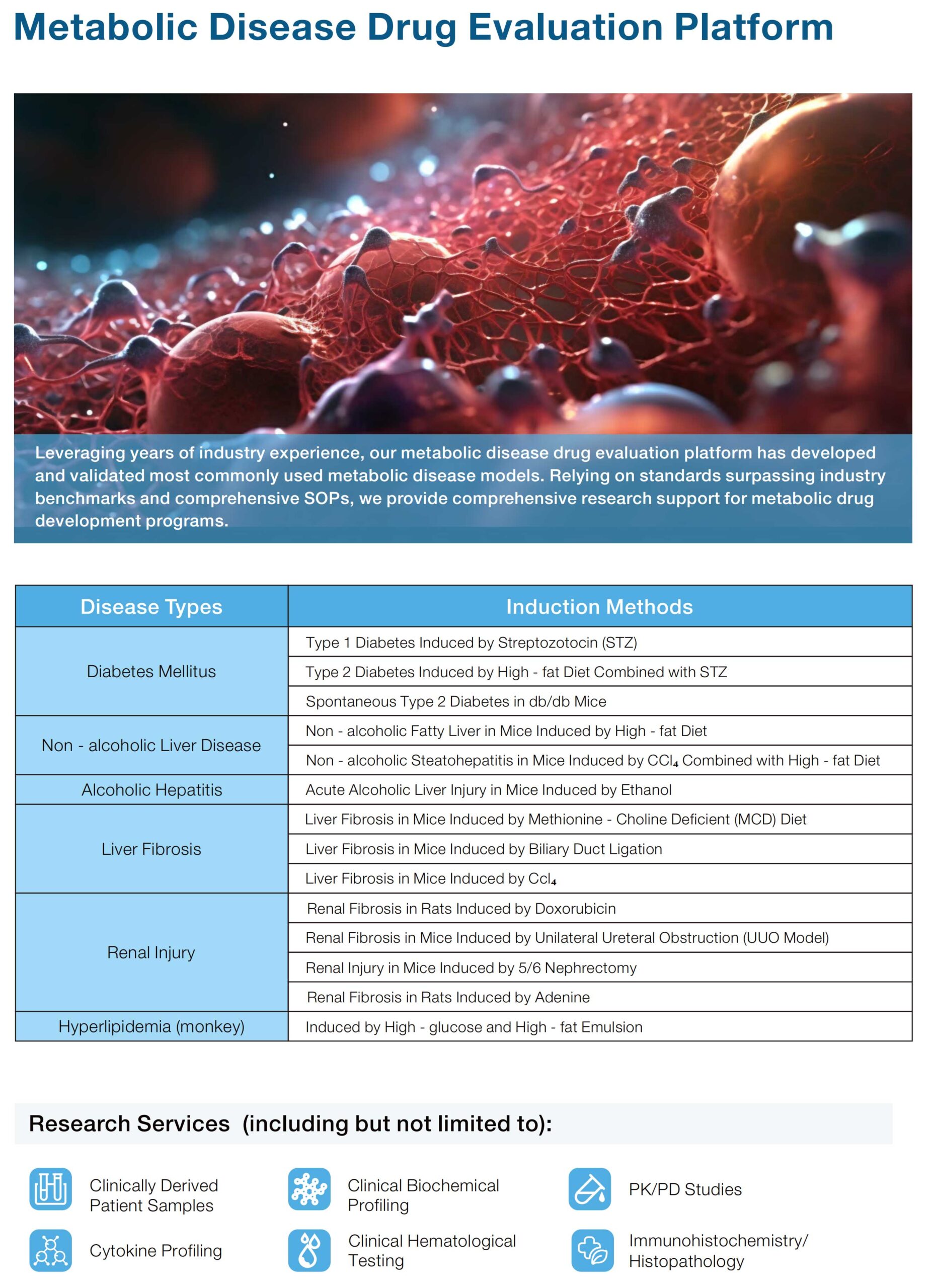
Jennio Biotech provides metabolic disease animal models in mice and rats for obesity, type 2 diabetes, NASH, and liver fibrosis. Our services support in vivo efficacy evaluation through integrated pathological, biochemical, and imaging-based readouts.
1. Obesity Models
Model: High-fat diet-induced obese mouse model (DIO), typically established within 16 weeks.
Key endpoints: Dynamic body weight monitoring, epididymal fat weight, fasting blood glucose, oral glucose tolerance test (OGTT), and in vivo microCT-based quantification of subcutaneous and visceral fat.
Application value: Suitable for evaluating anti-obesity candidates and metabolic changes associated with adiposity and glucose regulation.
2. Type 2 Diabetes Models
Model: High-fat diet combined with streptozotocin (STZ)-induced diabetic models, as well as spontaneous db/db mice with leptin receptor mutation that closely reflect human type 2 diabetes progression.
Key endpoints: Blood glucose, insulin, glycated hemoglobin (HbA1c), pancreatic histopathology by HE staining, glucagon, and C-peptide levels.
Application value: Suitable for evaluating glucose-lowering efficacy, insulin sensitivity, and metabolic regulation in preclinical diabetes studies.
3. Non-Alcoholic Steatohepatitis (NASH) Models
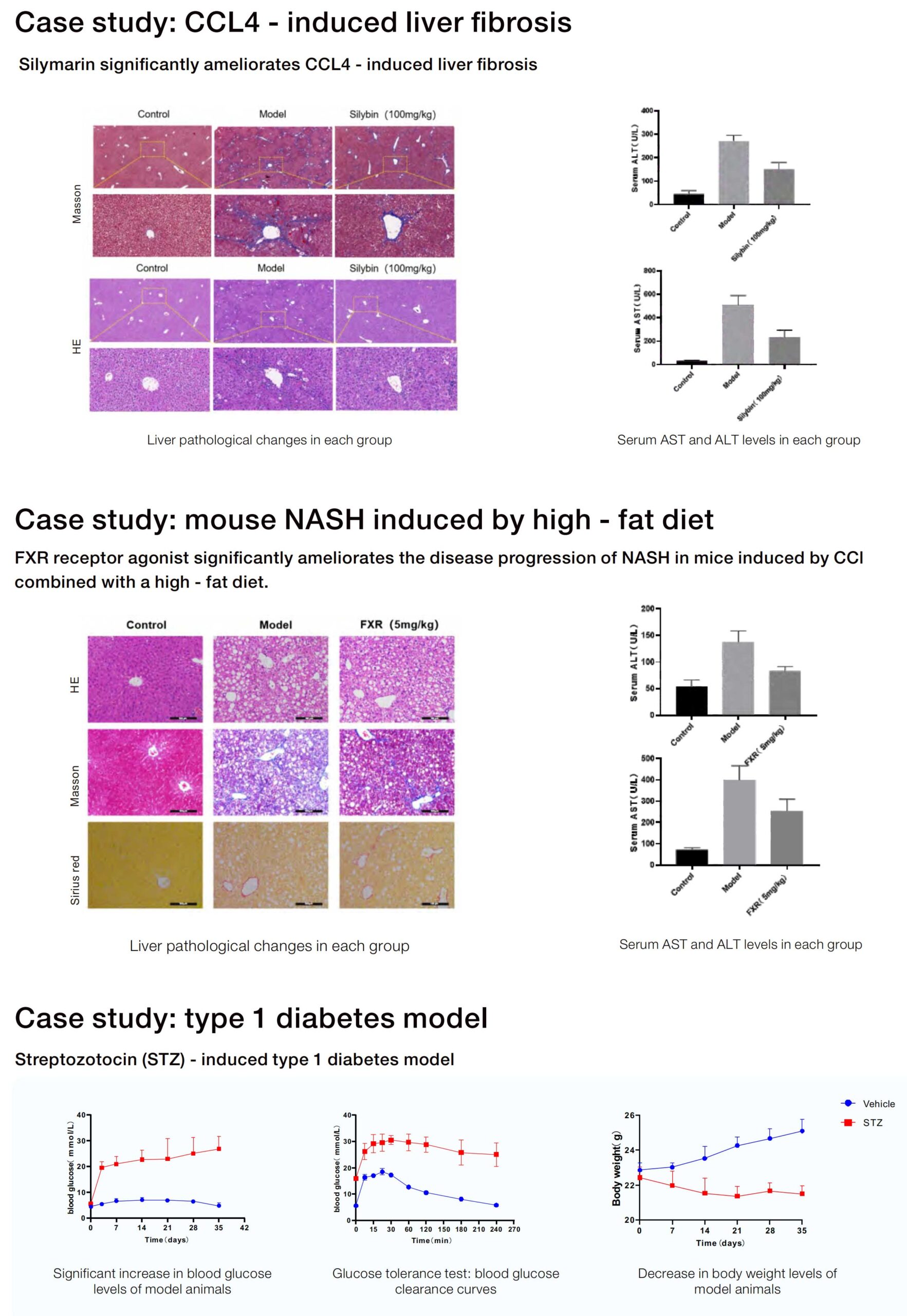
Model: C57BL/6 mice induced by high-fat diet with or without carbon tetrachloride (CCl4) for 16 weeks, showing representative features such as hepatic steatosis, inflammatory infiltration, tissue necrosis, and early-stage fibrosis.
Key endpoints: Serum ALT and AST, hepatic TG and TC content, HE staining for fat vacuole assessment, Masson staining for fibrotic collagen deposition, and fibrosis-related markers including alpha-SMA and collagen deposition.
Application value: Suitable for preclinical evaluation of anti-steatotic, anti-inflammatory, and anti-fibrotic drug candidates.
4. Liver Fibrosis Models
Model: CCl4-induced liver fibrosis models in mice or rats, typically established by intraperitoneal injection over 8 weeks with stable fibrotic pathology.
Key endpoints: Liver function markers including AST and ALT, Masson staining for fibrosis scoring, and HE staining for evaluation of inflammatory infiltration and tissue necrosis.
Application value: Suitable for efficacy studies of anti-fibrotic therapies and mechanistic research in chronic liver disease.
Why Choose Jennio Biotech for Metabolic Disease Model Studies
Jennio Biotech supports preclinical metabolic disease research with integrated technical platforms, clinically relevant models, and end-to-end study support.
Core Technical Platforms
In vivo imaging platform: MicroCT non-destructive scanning for fat distribution, supporting quantitative analysis of visceral and subcutaneous fat volume ratio.
Pathological analysis platform: HE, Masson, and Oil Red O staining for accurate assessment of steatosis, inflammation, and fibrosis.
Molecular detection platform: qPCR for inflammatory factors such as TNF-alpha and IL-6, ELISA for insulin and adiponectin, and Western Blot for signaling pathway proteins.
Differentiated Advantages
High clinical relevance: The db/db mouse model spontaneously exhibits key characteristics of human type 2 diabetes, including obesity, hyperglycemia, and insulin resistance.
Multi-model linkage: Supports simulation of disease progression from obesity to diabetes, NASH, and liver fibrosis.
One-stop detection: Integrates physiological indicators, imaging data, histopathology, and molecular readouts within one study framework.
Cooperation Advantages
Precise model matching: Flexible model selection according to drug mechanisms and study objectives.
Efficient delivery: Coordinated model construction and efficacy testing help improve study efficiency and turnaround time.
End-to-end support: Covers model establishment, efficacy evaluation, and preliminary mechanism exploration.
Metabolic Disease Animal Model Service Process
1.Study Consultation and Model Selection
Customized model solutions are developed according to drug mechanism, study objectives, and disease area, including options such as db/db mice or HFD+STZ models for metabolic disease research.
2.Study Execution and Progress Tracking
The study process includes model establishment, drug administration, and in vivo efficacy evaluation, together with regular progress sharing, weekly updates, and previews of key data.
3.Data Analysis and Report Delivery
Clients receive GLP-aligned reports including raw data and statistical analysis, along with representative deliverables such as body weight curves, microCT images of fat distribution, histopathology sections, and biochemical indicator summaries.
Metabolic Disease Model Quality Control and Compliance
Jennio Biotech follows GLP-aligned workflows and documented quality control procedures to support reliable study execution and data traceability.
Execution standards: Studies are conducted under GLP-aligned specifications covering experimental design, data recording, and report generation.
Quality control measures: Our workflow includes independent data review and regular calibration of key instruments, such as microCT systems.
Data traceability: Electronic laboratory notebook systems support study documentation and data traceability in compliance with 21 CFR Part 11 requirements.
Metabolic Disease Model Case Studies
Representative studies demonstrate how Jennio Biotech supports preclinical efficacy evaluation in obesity and NASH models with integrated pathological, biochemical, and functional readouts.
Case 1. Anti-Obesity Drug Evaluation in an HFD-Induced Obesity Model
Model: HFD-induced obesity in C57BL/6 mice, established over 16 weeks.
Intervention: Oral treatment with candidate drug X for 4 weeks.
Key results: Significant reductions in body weight and epididymal fat volume, together with improved glucose tolerance.
Data outputs: Body weight curves and OGTT results.
Case 2. Preclinical Efficacy Evaluation in a NASH Model
Model: NASH in C57BL/6 mice induced by high-fat diet combined with CCl4 over 16 weeks.
Intervention: Treatment with candidate drug Y for 8 weeks.
Key results: Reduced hepatic steatosis score, decreased inflammatory infiltration, and lower serum ALT levels.
Data outputs: Liver HE staining comparison images and serum ALT statistics.
Metabolic Disease Model FAQ
Find answers to common questions about metabolic disease animal models, study timelines, model selection, and data delivery.
What metabolic disease animal models do you provide?
We provide animal models for obesity, type 2 diabetes, NASH, and liver fibrosis in mice and rats, supported by integrated in vivo efficacy evaluation.
Which animal models are suitable for obesity and diabetes studies?
Commonly used models include HFD-induced obesity models, HFD+STZ-induced diabetic models, and spontaneous db/db mice, depending on study objectives and drug mechanism.
Do you provide CCl4-induced liver fibrosis or NASH models?
Yes. We support CCl4-induced liver fibrosis models as well as NASH models established by high-fat diet with or without CCl4, depending on the study design.
What endpoints can be included in a metabolic disease study?
Available endpoints include body weight, fasting blood glucose, OGTT, HbA1c, ALT/AST, histopathology, fibrosis markers, and imaging-based analysis such as microCT.
Do you support non-human primate metabolic disease models?
We currently focus on rodent metabolic disease models in mice and rats. Non-human primate studies require customized development based on project needs.
What is the data delivery timeline?
Basic efficacy data, such as body weight and blood glucose results, can typically be delivered within 10 working days after study completion. Histopathology data generally requires an additional 5 working days.
Preclinical Research Facility Highlights
SPF-grade animal facility: Capacity for 5,000 cages with an individual ventilation cage (IVC) system.
In vivo imaging platform: High-resolution microCT for quantitative fat imaging and distribution analysis.
Automated detection platform: High-throughput biochemical analyzer for serum ALT/AST detection, with daily processing capacity of more than 200 samples.
JennioBio—Empowering the development of new drugs for metabolic diseases through precision modeling, accelerating your preclinical success.
Product Details
Product Details
Jennio Biotech provides preclinical metabolic disease animal models in mice and rats for obesity, type 2 diabetes, NASH, and liver fibrosis. Our in vivo models support study design, efficacy evaluation, pathology, biochemical analysis, and imaging endpoints for translational drug discovery.
Listen to the voice of every customer
Share details of your inquiry, and we’ll contact you shortly.
Contact us
Room 238, Building A, Guangzheng Science and Technology Park, No. 11 Nanyunwu Road, Huangpu District, Guangzhou, Guangdong Province, China