Orthopedic disease models

Orthopedic disease models

The skeleton is an important tissue structure in the human body, providing support for the body’s structure, protecting vital organs, and facilitating joint movement. There are various types of orthopedic diseases, including osteoporosis, arthritis, fractures, congenital bone disorders, etc., which have a significant impact on people’s health and quality of life.

Details

1、Accelerating Orthopedic New Drug Translation | Precisely Simulating Clinical Pathology for Efficient Drug Efficacy Evaluation

Traditional models fail to replicate the complex pathological processes of human bone and joint degeneration as well as fracture healing, resulting in low clinical translation rates. Jennio Bio provides high-fidelity orthopedic disease models combined with a multi-dimensional evaluation system, shortening drug screening cycles by 50% and significantly reducing the risk of clinical failure.

2、Service Overview

Orthopedic diseases (e.g., osteoarthritis, osteoporosis, fractures) feature complex pathological mechanisms, and animal models must highly mimic the characteristics of human diseases. The current industry pain points are as follows:

  • Insufficient model fidelity: Failure to reproduce key pathological features such as human bone metabolic imbalance and cartilage degeneration.
  • Single evaluation dimension: Over-reliance on traditional imaging, lacking multi-omics combined verification.
  • Low translation rate: Disconnect between preclinical data and human in vivo responses.

Jennio Bio’s Solutions:

  • Establish highly clinically relevant models via surgical/drug induction (e.g., ACLT + meniscectomy osteoarthritis model, ovariectomized osteoporosis model).
  • Integrate imaging (Micro-CT), histopathology (HE/Safranin O-Fast Green staining), biomechanics and molecular marker detection to provide a multi-dimensional evidence chain for drug efficacy.
  • The validated models show high consistency with clinical pathology, facilitating the accelerated IND filing of new orthopedic drugs.

3、Our Services

  1. Osteoarthritis (OA) Model
  • Modeling Method: ACLT + meniscectomy in rats (literature-validated method)
  • Evaluation Indicators:
  1. Imaging: Micro-CT for quantitative analysis of osteophyte formation and joint space narrowing
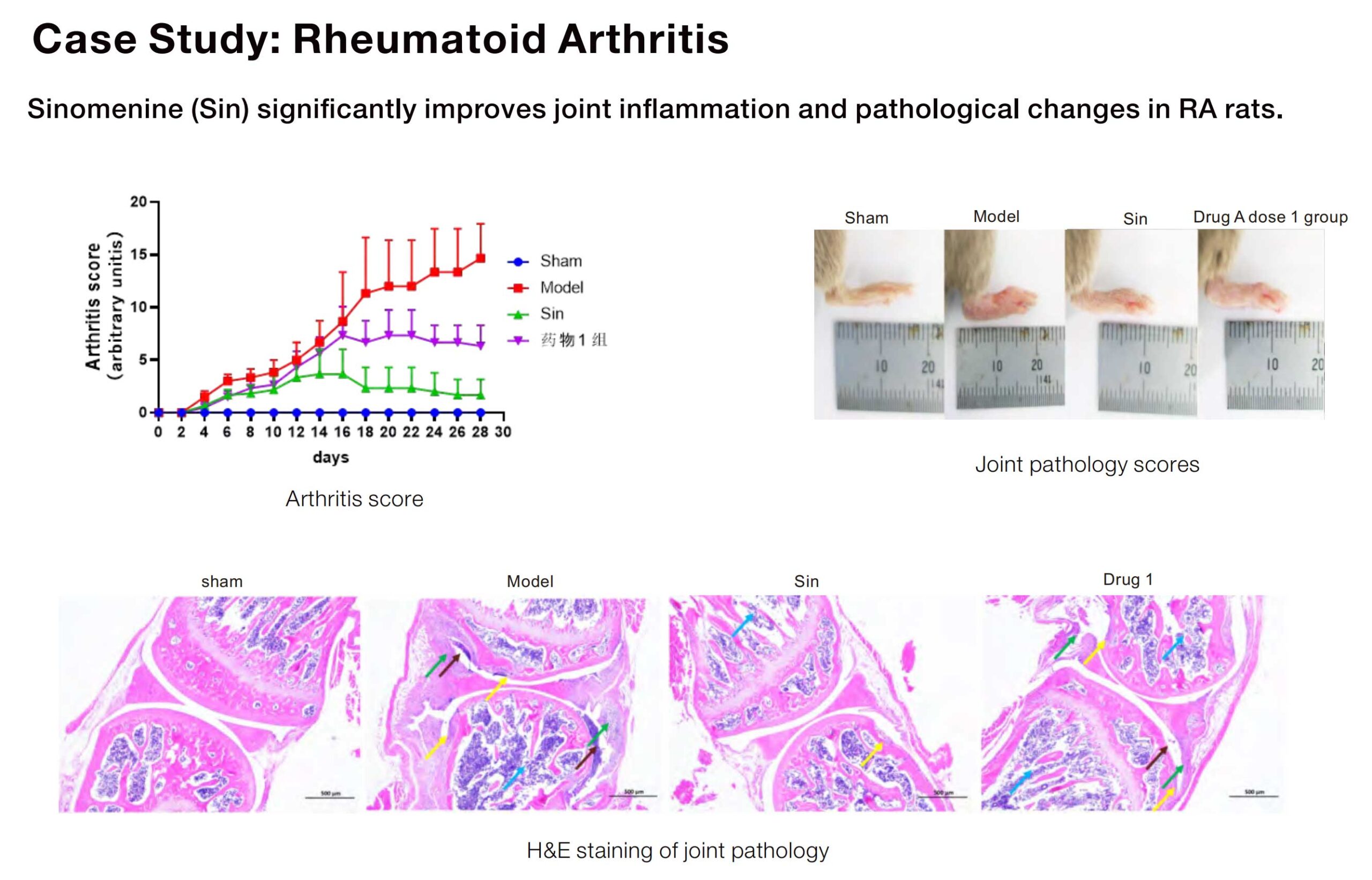
  2. Histopathology: H&E staining for assessing cartilage damage and synovitis; Safranin O-Fast Green staining for detecting proteoglycan loss
  3. Behavioral assessment: Gait analysis, joint diameter measurement
  • Cycle: Model establishment at 6–8 weeks post-surgery, with 4 weeks of efficacy intervention
  1. Osteoporosis (OP) Model
    • Modeling Method: Ovariectomy (OVX) in rats
    • Evaluation Indicators:
    • Bone mineral density: Micro-CT for quantitative analysis of trabecular number/thickness (Tb.N/Tb.Th)
    • Bone metabolic markers: Serum calcium, serum phosphorus, serum TRACP-5b, OPG/RANKL
    • Cycle: Model establishment at 12 weeks post-surgery
  1. Fracture Healing Model
  • Modeling Method: Closed mid-femoral fracture with Kirschner wire internal fixation in C57 mice
  • Evaluation Indicators:
  • Imaging: X-ray/Micro-CT for dynamic monitoring of callus formation (once weekly)
  • Histology: Masson staining for assessing collagen deposition; ALP staining for detecting osteogenic activity
  • Cycle: Efficacy evaluation at 4–8 weeks post-modeling

4、Technology Platforms and Advantages

Technology Platforms

  • High-precision imaging platform: Micro-CT (5μm resolution) for 3D reconstruction of bone microstructure; small animal X-ray (9.4T)
  • Multimodal pathological platform: Automated staining system (HE/Safranin O-Fast Green/Masson), supporting the full process of decalcified bone tissue sectioning
  • Biomechanical analysis: Universal testing machine for quantifying bone strength/elastic modulus

Key Differentiated Advantages

  • Industry-leading model fidelity: Bone marrow adipogenesis rate > 40% in the OVX model, with model construction verified by multimodal detection methods
  • Full-chain data integration: From dynamic imaging monitoring to molecular mechanism verification (e.g., qPCR detection of COL2A1/MMP13), providing mechanism-phenotype correlation evidence
  • GLP-aligned quality management: Experimental procedures comply with OECD GLP guidelines, with fully traceable data (all raw data/images retained).

5、Service Process

  1. Requirement Confirmation (1 working day): Customization of model protocols (species/modeling cycle/detection indicators)
  2. Model Establishment (4–12 weeks): Real-time sharing of surgical imaging and animal status videos
  3. Efficacy Intervention (2–8 weeks): Weekly progress reports submitted (body weight/behavioral assessment/imaging preview)
  4. Data Delivery (2 weeks):
    • Basic Package: Raw images + statistical reports (Excel/SPSS format)
    • Premium Package: Mechanism interpretation report (signaling pathway network diagram) + publication-grade figures

6、Quality Control and Compliance

  • Compliance Standards: LaboratoryAnimal Use License (SYXK 2023-0187); AAALAC-accredited animal facility
  • Quality Control Measures:
  1. Double-blind pathological scoring (conducted by 2 independent pathologists)
  2. Instrument calibration: Micro-CT quality control scanning (calibration with standard reference materials)
  • Data Integrity: Full traceability of raw data supported

7、Case Study: Efficacy Evaluation of an Osteoarthritis Drug

  • Project Background:
    • In vivo efficacy verification of a small-molecule inhibitor (targeting MMP13)
  • Solutions:
  • Model Construction:
    • Establishment of SD rat ACLT-OA model (n=10/group) with 4 weeks of drug administration
  • Key Results
  1. Micro-CT: 58% reduction in osteophyte volume in the treatment group (p<0.01 vs model group)
  2. Histopathology: 62% decrease in OARSI score (Safranin O staining)
  3. Molecular mechanism: 70% downregulation of MMP13 mRNA expression in articular cartilage (verified by qPCR)
  4. Client Value:The data supported the compound entering Pre-IND research, with the project cycle shortened to 12 weeks.

8、Collaboration Advantages

  • Efficient delivery: Model establishment success rate > 95%, with a 30% cycle reduction for expedited projects
  • End-to-end support: From model customization to the compilation of application materials (e.g., CTD Module 2.4.2 efficacy reports)
  • Cost optimization: Shared model library resources (e.g., osteoporotic rats) to reduce development costs

9、Laboratory Highlights

High-resolution Micro-CT (5μm) enables quantitative analysis of bone microstructure changes in osteoporosis models, supporting the automatic analysis of bone volume fraction (BV/TV).

Explore the full laboratory view: SPF Animal Facility Live Scenes


10、Contact Us

Consult Now:

  • 📧Email: xuguoquan@jennio-bio.com
  • 📞Tel: +86 20 2906 5209

Limited-time Resources:

  • Download the Technical White Paper on Orthopedic Disease Models:
  • Apply for free pre-experimental protocol design:

Jenio is committed to providing highly predictive preclinical decision-making support for every new orthopedic drug, with a focus on clinical translation.


Listen to the voice of every customer

Share details of your inquiry, and we’ll contact you shortly.​

Contact us

Room 238, Building A, Guangzheng Science and Technology Park, No. 11 Nanyunwu Road, Huangpu District, Guangzhou, Guangdong Province, China

Business Cooperation

3691125803@qq.com

Mobile phone number/WeChat ID

+86 18802035152