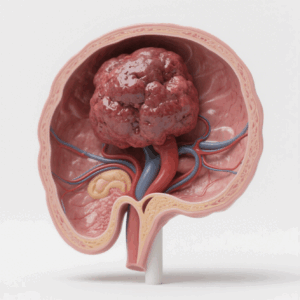
Jennio Biotech provides cell line-derived xenograft (CDX) mouse models for preclinical oncology research, supporting efficacy evaluation, PK/PD studies, combination therapy assessment, and in vivo mechanism investigation. By implanting human tumor cell lines into immunodeficient mice, CDX models offer a practical and reproducible platform for anti-tumor drug testing across multiple cancer indications.
Jennio Biotech provides cell line-derived xenograft (CDX) model services for preclinical oncology research. Our platform supports tumor model construction, pharmacodynamic evaluation, and customized study design across multiple cancer types, helping improve the translational value of in vivo efficacy studies.
Model Construction and Customization
Subcutaneous models: Suitable for primary screening and routine efficacy evaluation, with support for multiple established tumor cell lines.
Orthotopic models: Designed to better reflect the primary tumor microenvironment and support the evaluation of tumor progression in tissue-specific sites.
Metastatic models: Used to assess tumor dissemination and anti-metastatic activity, including pulmonary metastatic models established by tail vein injection.
Pharmacodynamic Evaluation Indices
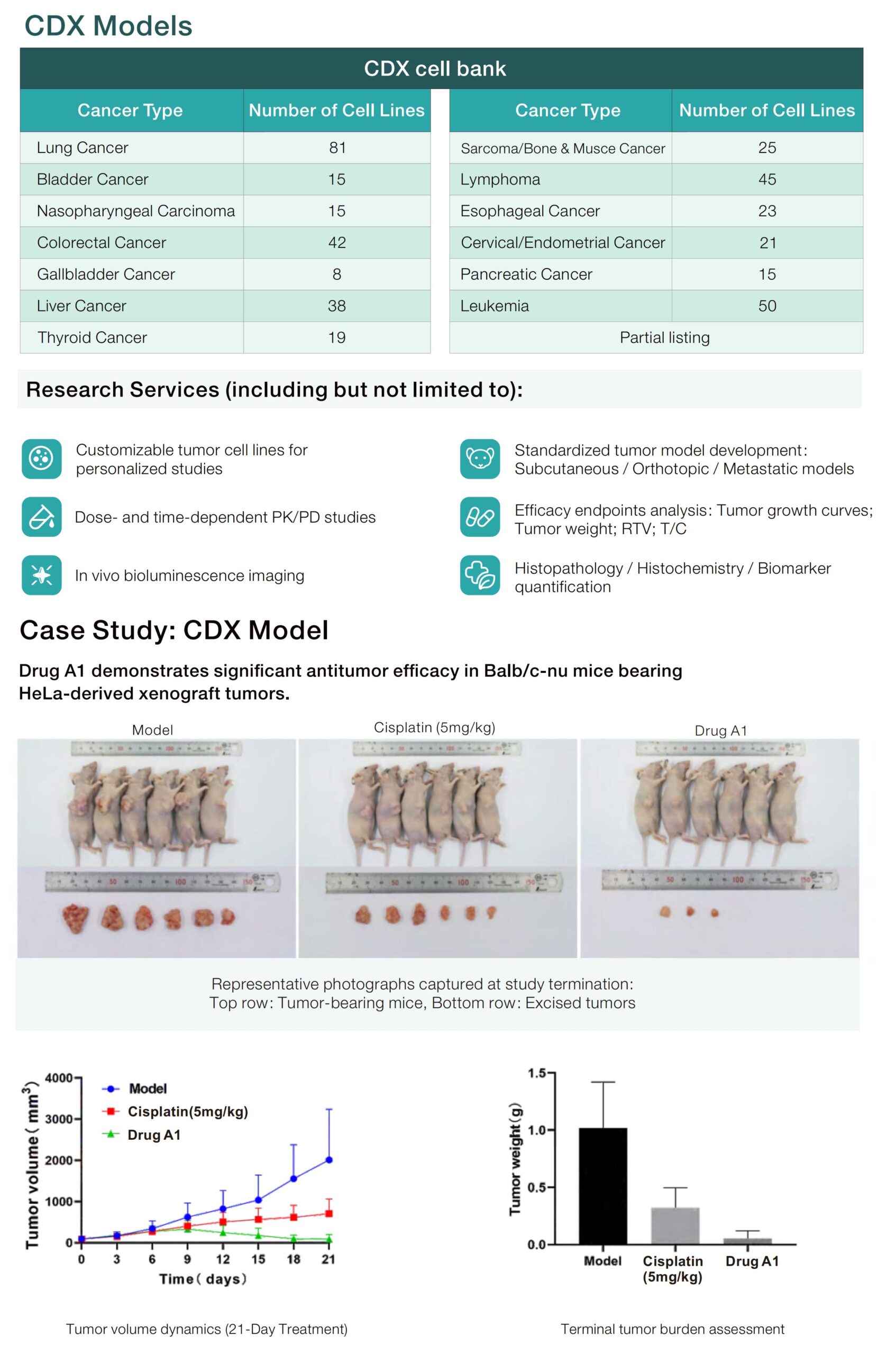
Basic indices: Body weight, tumor volume, relative tumor volume, T/C value, tumor weight, and tumor growth inhibition rate.
Advanced assays: In vivo fluorescence imaging, histopathology, and ELISA for pharmacodynamic and biomarker assessment.
Customized analyses: Flow cytometry for immune cell infiltration and support for drug-resistant cell line model establishment.
Cell Resource Library Support
Broad cancer coverage: CDX studies are supported across multiple cancer types, including lung cancer, colorectal cancer, and leukemia.
Cell line quality support: STR authentication and drug resistance prescreening data are available for selected cell resources.
Integrated platform support: Imaging, pathology, and other downstream evaluation services can be incorporated according to study requirements.
Why Choose Our CDX Services
Jennio Biotech combines clinically relevant CDX model design, standardized research platforms, and responsive project support to help researchers improve study efficiency, data reliability, and translational value in preclinical oncology research.
CDX Platform and Technical Advantages
1,000+ human and murine cell lines: Standardized model resources support subcutaneous, orthotopic, and intravenous inoculation strategies.
15 cancer types covered: Available resources include 81 lung cancer cell lines, 42 colorectal cancer cell lines, and 50 leukemia cell lines.
Integrated evaluation support: In vivo imaging, histopathology, and immunohistochemistry support dynamic efficacy tracking and tissue-level analysis.
Differentiated Advantages
Enhanced clinical relevance: Orthotopic CDX models better reflect the in vivo tumor microenvironment and support more clinically relevant pharmacodynamic evaluation.
Full-cycle quality oversight: Quality control is implemented throughout the study process, from cell inoculation to pharmacodynamic report delivery.
Cost-efficient study planning: CDX model establishment costs can be as low as RMB 600 per animal for selected nude mouse models.
Collaboration Advantages
21-day report delivery: Standardized workflows help accelerate pharmacodynamic reporting compared with the 35-day industry average cited in the original materials.
48-hour response support: Data review requests can be addressed within 48 hours during project execution.
One-stop customized collaboration: Support covers model establishment, pharmacodynamic evaluation, and related mechanism studies across different cancer types and therapeutic strategies.
CDX Study Workflow
Jennio Biotech follows a structured CDX study workflow to support efficient project initiation, controlled study execution, and timely data delivery.
Requirement confirmation within 1 working day: Study goals, cell line selection, and dosing strategy can be aligned quickly at project initiation.
Model establishment in 7–21 days: CDX model establishment is supported with tumor formation and body weight monitoring during the process.
Pharmacodynamic evaluation during the study: Tumor measurements are conducted regularly, with in vivo imaging performed at key time points when required.
Comprehensive data delivery: Final outputs can include raw imaging data, pathological sections, statistical analysis, and project summary reports.
Data review requests supported within 48 hours: Follow-up communication and data clarification are supported throughout project execution.
Quality Control and Compliance for CDX Research
Animal welfare oversight: Study execution is conducted under animal welfare supervision and internal management procedures.
Data traceability: Experimental records are electronically archived to support review and long-term traceability.
GLP-aligned procedures: Standard operating procedures are applied throughout the study process to support consistent project execution and data generation.
Representative CDX Case Studies
Representative case studies demonstrate the application of our CDX models in orthotopic tumor research, pharmacodynamic evaluation, and in vivo efficacy assessment.
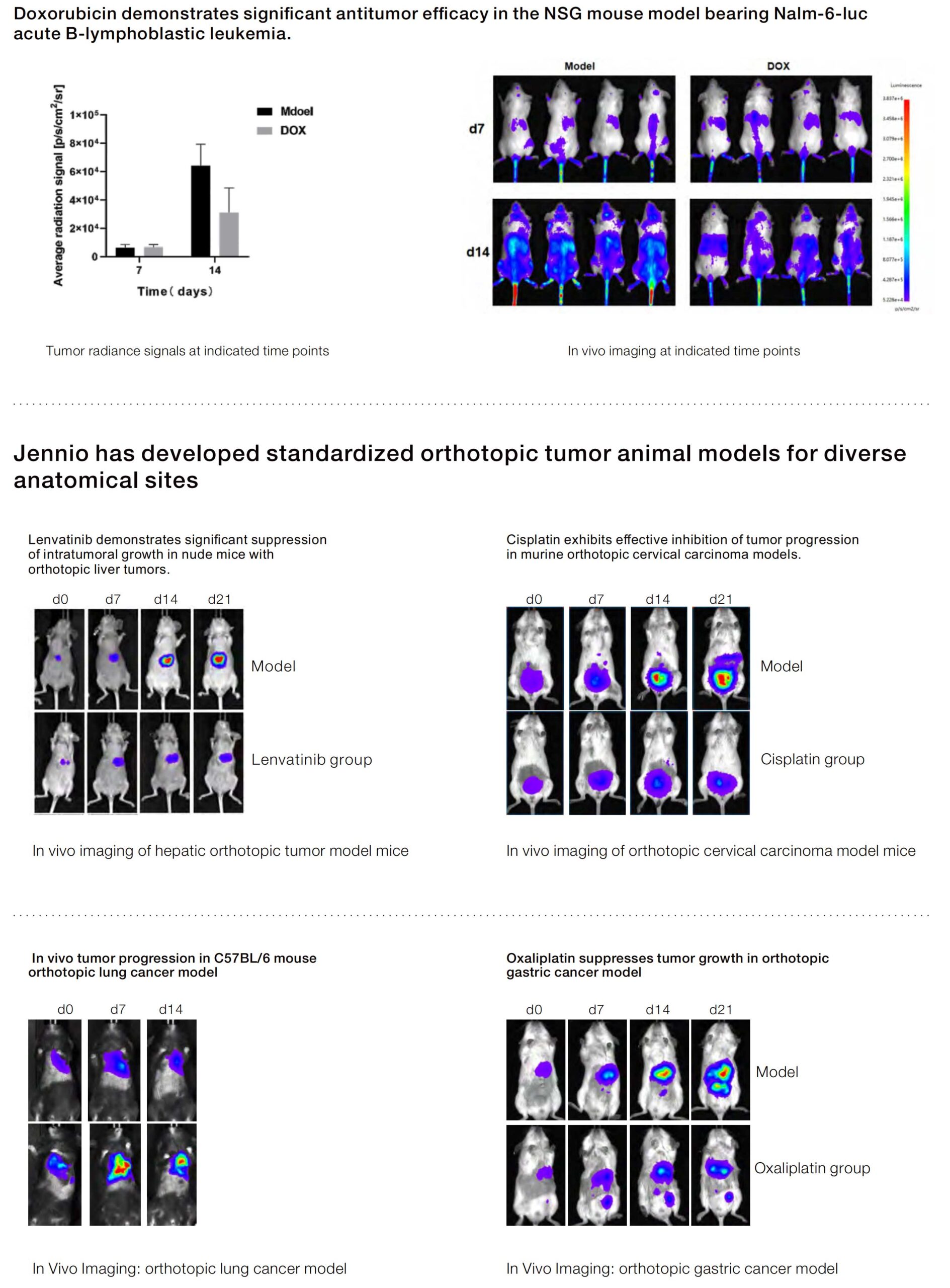
Case 1: Pharmacodynamic Evaluation of an Orthotopic Liver Cancer CDX Model
Model: Orthotopic transplantation of HepG2-luc in NCG mice
Intervention: Lenvatinib treatment for 21 days
Results: Tumor signal was reduced by 68%, and tumor weight decreased by 72% in the treatment group.
Case 2: Pharmacodynamic Evaluation of an Orthotopic Gastric Cancer CDX Model
Model: MKN45-luc orthotopic model
Regimen: Oxaliplatin
Results: The T/C value reached 28%, demonstrating significantly better efficacy than the monotherapy control group.
The following representative figures further illustrate the use of CDX and orthotopic tumor models in efficacy evaluation across different tumor types.
For additional case studies, please visit the Jennio CDX Model Special Topic Database.
Laboratory and Facility Highlights
Our research environment is designed to support stable animal studies, routine facility management, and imaging-based efficacy evaluation for preclinical oncology research.
Controlled laboratory environment: 10,000-class purification, capacity for 5,000 cages, and stable temperature and humidity control for routine animal study support.
Imaging-based study support: Detection of 10³-level cellular fluorescence signals to support dynamic in vivo drug efficacy tracking.
CDX Studies FAQ
Find answers to common questions about CDX model selection, study design, tumor types, workflow, and technical support for preclinical oncology research.
Q1. What types of CDX models can you provide?
Jennio Biotech supports subcutaneous, orthotopic, and metastatic CDX models for different study goals. Model selection can be tailored according to tumor type, research objective, and expected pharmacodynamic readouts.
Q2. Which cancer types are available for CDX studies?
Our CDX resources cover multiple cancer types, including lung cancer, colorectal cancer, leukemia, and other solid and hematologic tumor models. Specific cell line availability can be confirmed during project planning.
Q3. Can you support orthotopic and metastatic CDX studies?
Yes. We support orthotopic and metastatic CDX model development for studies that require improved clinical relevance, tissue-specific tumor behavior, and evaluation of tumor dissemination or anti-metastatic activity.
Q4. What endpoints can be included in a CDX study?
Common endpoints include tumor volume, relative tumor volume, T/C value, tumor weight, and tumor growth inhibition. Depending on study needs, in vivo imaging, histopathology, ELISA, and other customized analyses can also be included.
Q5. How long does a CDX study typically take?
Project planning can begin within 1 working day after requirement confirmation. Model establishment typically takes 7–21 days, and study timelines may vary depending on tumor type, model design, and pharmacodynamic endpoints.
Free access to the Technical White Paper on CDX Model Construction(covering practical guidelines for 50+ cancer types).
10% off on your first order; a customized plan will be provided within 48 hours after submitting the requirement form.
Product Details
Product Details
Jennio Biotech provides cell line-derived xenograft (CDX) mouse models for preclinical oncology research, supporting efficacy evaluation, PK/PD studies, combination therapy assessment, and in vivo mechanism investigation. By implanting human tumor cell lines into immunodeficient mice, CDX models offer a practical and reproducible platform for anti-tumor drug testing across multiple cancer indications.