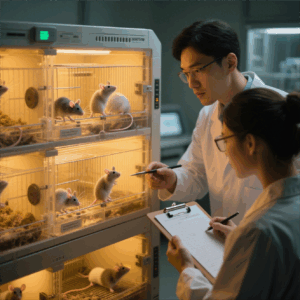

Patient-Derived Xenograft (PDX) mouse model

Patient-Derived Xenograft (PDX) mouse model

To gain a deeper understanding of the biological characteristics of tumors and the efficacy of drug treatments, a mouse model (PDX) directly derived from human tumor tissue has been established. The xenograft tumor model is established by transplanting fresh human tumor tissue into immunodeficient mice. Since the transplanted tissue originates from a patient’s tumor, it maximally preserves the tumor’s specificity. Moreover, as the tissue is not artificially cultured, its biological characteristics remain intact and closely resemble clinical conditions. This model is considered the most advanced tumor animal model currently available.

Details

Low Clinical Conversion Rate? PDX Models Enable Accurate Prediction of Antitumor Efficacy and Accelerate New Drug Development

  • Pain Point: Traditional CDX models suffer from the lack of tumor microenvironment and insufficient heterogeneity, resulting in a disconnect between preclinical data and human clinical efficacy, and a high failure rate in new drug development.
  • Value Proposition: Jennio Bio provides high-fidelity PDX model services that preserve the biological characteristics of patient tumors, significantly improving the accuracy of efficacy prediction and greatly shortening the R&D cycle.

1、Service Overview

  • PDX (Patient-Derived Xenograft) models are a core tool for preclinical anticancer drug evaluation. By implanting fresh patient tumor tissue into immunodeficient mice, they highly recapitulate the tumor microenvironment, heterogeneity, and drug response profiles.
  • Traditional models lose key biological characteristics due to long-term in vitro culture, resulting in low clinical translation rates.
  • Our PDX services target the pain points of pharmaceutical companies and provide a one-stop solution from model establishment to efficacy evaluation, enabling accurate screening of effective drug candidates and reducing the risk of clinical failure.

2、Our Services

PDX Model Establishment and Cryopreservation

Technical Details:

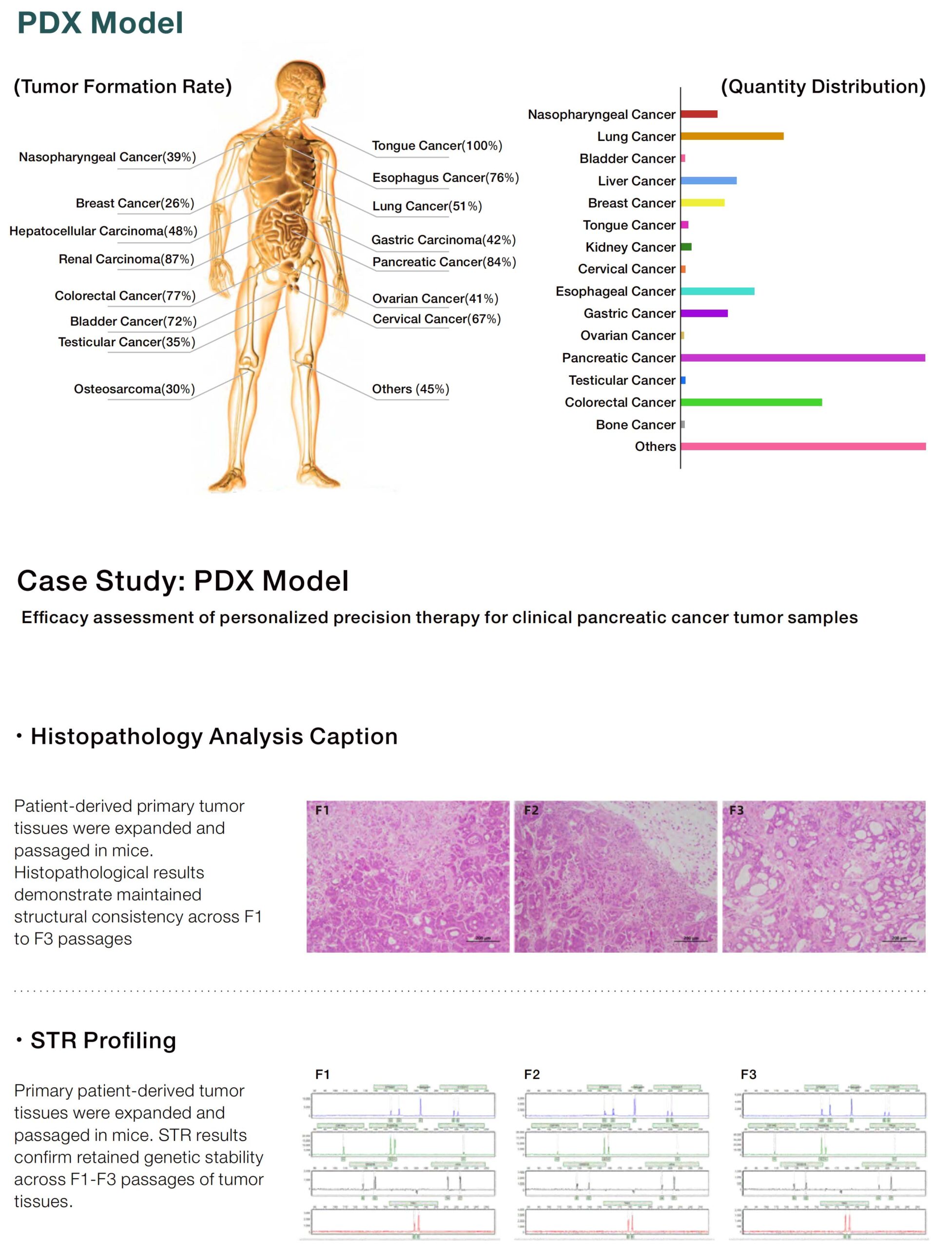
  • Third-generation immunodeficient mice (e.g., NCG mice) are used for engraftment with patient surgical/biopsy samples (hepatocellular carcinoma, lung cancer, colorectal cancer, pancreatic cancer, etc.), with a tumor formation rate of over 80% at F3 generation.
  • STR analysis is performed across multiple passages (F0–F3) to ensure genetic stability, and H&E staining is used to verify consistency in pathological characteristics.

Application Scenarios:

Supports efficacy evaluation and drug resistance mechanism research of solid tumors.

In Vivo Pharmacodynamic Evaluation

Technical Details:

  • Group Design: Control group, monotherapy group, and combination therapy group (e.g., oxaliplatin + 5 Fu regimen).
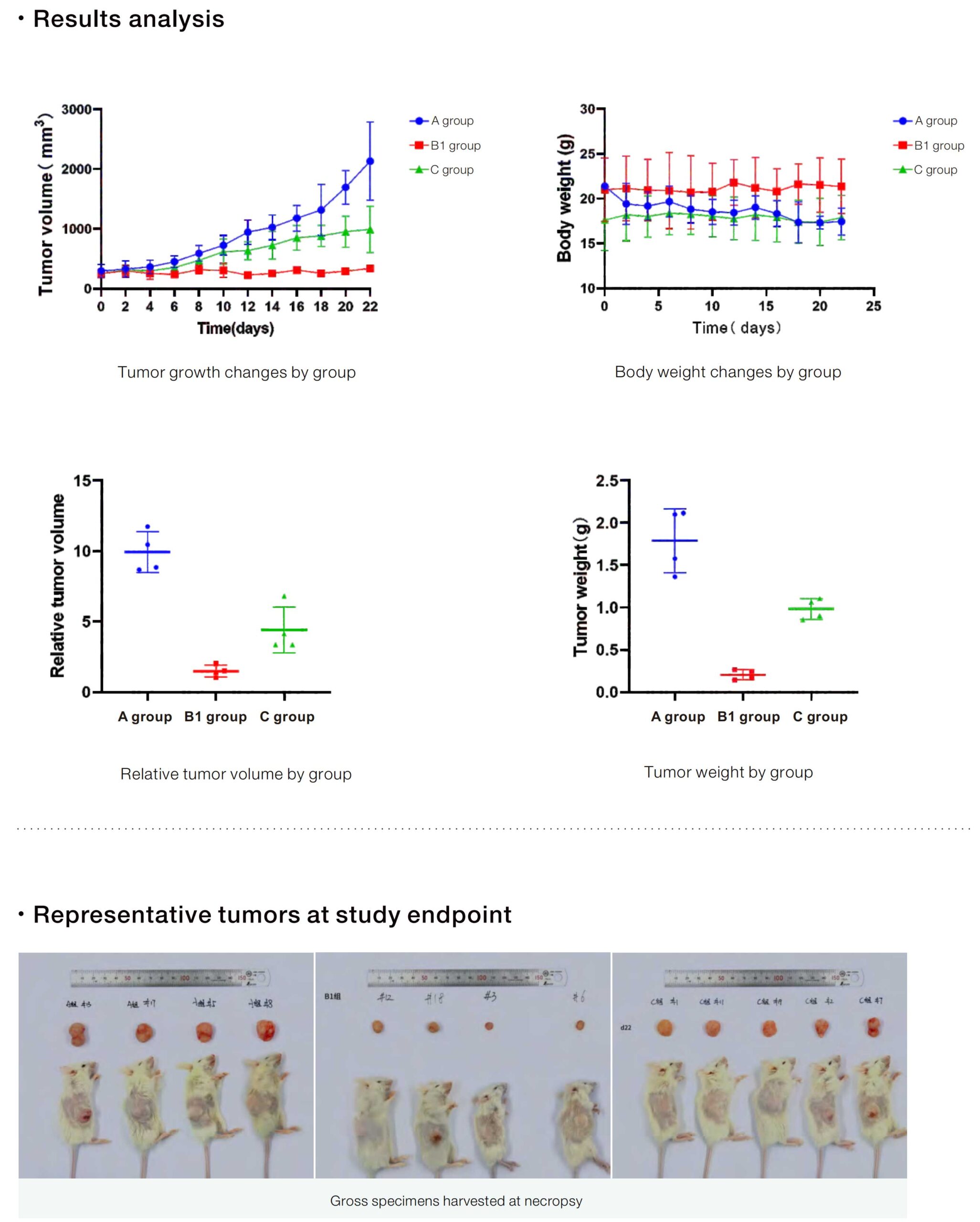
  • Evaluation Indicators: Relative tumor volume (RTV), tumor growth inhibition rate (TGI%), and overall survival (OS) prolongation.

Case Study:

  • In a pancreatic cancer PDX model, the combination therapy group achieved a TGI of 72%, which was significantly superior to the model control group (vs. model control group, P < 0.05).
  • Individualized Drug Sensitivity Screening (QuiGue™-PDX)
  • Technical Details:
    • Rapid evaluation of 6–8 chemotherapeutic / targeted regimens using clinical patient tumor samples, with efficacy ranking provided (e.g., oxaliplatin based regimen as the preferred option).
    • Deliverables: Tumor growth curves, tumor weight comparison, histopathological analysis, images of animals and tumors.

3、Technology Platforms and Advantages

  • Core Technology Platform
    • PDX Model Library: Covers more than 15 cancer types including liver cancer (48% modeling rate), colorectal cancer (77%), lung cancer (76%), with nearly 300 samples in the live specimen bank.
    • Innovations:
      • Independently established a clinically derived tissue bank from F0 to F3 generations, with high tumor formation rate and high stability.
      • Multi-omics verification (genomics / transcriptomics) to ensure consistency between models and primary tumors exceeds 90%.
    • Infrastructure
      • SPF Laboratory Animal Center: 5,000 cage capacity, equipped with in vivo imaging system and PET-CT for real-time tumor monitoring.
      • Molecular Platform: STR authentication and CRISPR gene editing to support model customization.
    • Differentiated Advantages
      • Clinical Relevance: Higher consistency between drug efficacy results and clinical response compared with other tumor models.
      • Full Cycle Support: From model establishment and efficacy testing to data integration for IND submission.

4、Service Process

  • Requirement Communication (24-hour response): Customized study protocol (cancer type, drug combination, detection indicators).
  • Sample Implantation: Patient-derived tumor implanted into immunodeficient mice; average modeling time: 30 days.
  • Efficacy Study: Grouped administration; tumor volume measured twice weekly (caliper / in vivo imaging).
  • Data Delivery:
    • Basic Report: Tumor growth curve, TGI%, survival analysis (Week 4).
    • In-depth Analysis: Histopathology (HE/IHC), molecular subtyping (optional).
  • GLP-aligned Report: Compliant with FDA / NMPA submission requirements; raw data traceable.

5、Quality Control and Compliance

  • Standards Compliance: AAALAC animal welfare standards, ISO 9001 quality management system.
  • Quality Control Measures:
    • STR locus verification for each generation of PDX (to prevent cross-contamination).
    • Independent double data review; third-party laboratory cross-validation (optional).
  • GLP-aligned: Experimental operations and data management comply with GLP standards (Note: Not certified, but implementation meets requirements).

6、Case Studies

Case 1: Personalized Drug Sensitivity Screening for Pancreatic Cancer
  • Background: patients with advanced pancreatic cancer experienced treatment failure after multiple lines of therapy.
  • Protocol: A PDX model was used to test 5 combination regimens (including oxaliplatin + irinotecan + 5-Fu).
  • Results: For Group B2 (oxaliplatin regimen), the TGI reached 68%, and the tumor growth rate was significantly inhibited (VS model control group, P<01).
  • Clinical Feedback: After the regimen was administered to the patient, the progression-free survival was extended by 4 months.

7、Cooperation Advantages

  • High Efficiency: Average 60 days to complete the whole process from model establishment to report delivery (industry average: 90 days).
  • High Precision: Over 300 Chinese patient-derived tumor banks, with better alignment to the drug efficacy response of the Asian population.
  • One-stop Service: Support for companion diagnostics (e.g., PD-L1 detection) and integrated PK/PD analysis.
  • Cost Optimization: Model preservation service reduces the cost of repeated experiments by 30%.

8、FAQ

  • Q1:Can PDX models be used for immunotherapy evaluation?

A: It needs to be combined with humanized immune system mice (e.g., HIS model). Customized service is available.

  • Q2:How to ensure sample viability during transportation?

A: Special preservation solution (4°C), delivery within 72 hours, viability rate > 90%.

  • Q3: Is double-blind, multi-center validation supported?

A: Yes. We have cooperated with third-party platforms including Dian Diagnostics and Nuohankang Medical.

9、Laboratory Highlights

  • SPF Animal Facility: Class 10,000 cleanroom with real-time environmental monitoring (temperature, humidity, pressure differential).
  • In Vivo Imaging Platform: IVIS spectrometer for dynamic tracking of tumor fluorescence signals.
  • Tissue Bank: -80°C ultra-low temperature storage, supporting sample traceability.

10、Contact Us

Contact Us Now:

  • Tel: +86 18802035152
  • Email: 3691125803@qq.com
  • Online Form: Submit your request

Limited-Time Offer:

  • Download the White Paper Application of PDX Models in Anticancer Drug Development
  • Free Protocol Design: First order includes complimentary model construction feasibility assessment!


Listen to the voice of every customer

Share details of your inquiry, and we’ll contact you shortly.​

Contact us

Room 238, Building A, Guangzheng Science and Technology Park, No. 11 Nanyunwu Road, Huangpu District, Guangzhou, Guangdong Province, China

Business Cooperation

3691125803@qq.com

Mobile phone number/WeChat ID

+86 18802035152