The study team treats CRO compliance as a connected system of controls that keeps every result traceable and reviewable. We verify the materials, methods, and controls before accepting the study summary and compliance documentation..

We reconstruct the result from the biological input, procedure, control performance, and source data. We provide our partner with the scientific reasoning behind the study conclusion and its supporting evidence.. The relevant benchmark is not activity alone; it is activity that survives review of controls and context.
The study team treats each facility qualification as evidence of a defined control, not as a substitute for study-specific documentation. We preserve the distinction so a future compliance program comparison starts from the same assumptions.
Compliance review needs to examine SOP governance, personnel training, material authentication, equipment calibration, and protocol approval before study initiation.. We also review animal ethics, biosafety, data integrity, audit trails, deviation and CAPA handling, archival, report review, and partner access. We avoid extending a model-specific result into a claim about patients.
Operational convenience affects scheduling, while compliance program is interpreted in line with biological relevance. We expect the study to reduce uncertainty without losing traceability or stated limits. When partner teams compare top CRO companies, we examine whether every endpoint has a defined decision role.
Facilities Are Only the First Layer of Compliance
A CRO may have strong infrastructure while a particular exploratory efficacy study remains non-GLP, so accurate terminology and project-specific documentation are essential. We judge a method by the biological process it can measure. Before accepting a compliance program readout, we define its system, dose, observation window, and limitations.
A familiar service label alone cannot show that the compliance program system performs as intended. We examine the evidence supporting the model or assay itself. At study level, we operate as a specialized preclinical efficacy CRO and drug-evaluation platform that integrates disease model development, efficacy evaluation, and pharmacology studies.
We include in vitro studies, in vivo efficacy evaluation, non-GLP pharmacology and toxicology, and specialized platforms for innovative therapies in the study record. We draw on more than 15 years of experience to study procedures and quality controls required by the individual preclinical program.
Before discussing throughput, we establish relevance. The value of the program depends on how closely the model reflects the mechanism. The study team builds confidence in the compliance program study interpretation from authenticated, suitable biological material. Facility credentials matter here because they define how cell banks, containment areas, animal housing, and study records are governed.
For every facility credential, we identify the operational control it verifies and retain the protocol-level evidence separately. Our review covers provenance, identity, condition, and suitability before execution. In Jennio Biotech programs, we apply these controls while keeping the partner’s decision criteria visible.
Data Integrity Lives in Daily Operations
Operational consistency protects scientific interpretation. Before compliance program begins, we assign sampling windows, instrument verification, and review responsibility. Early compliance program documentation preserves the reasoning for later reviewers. We will revisit that decision if later evidence changes the scientific balance. This action carries the compliance program rationale beyond the original protocol team.
We establish compliance program data quality at collection and preserve it through analysis and reporting. A qualification record supports a specific control; it does not replace the documentation generated for an individual study.
Each compliance program result in our record identifies its method, material, and review status. For CRO preclinical research programs, our service portfolio covers cell-based models, efficacy studies, and specialized disease models.. The supporting program can incorporate cell functional assays, tumor and immuno-oncology systems, inflammatory and autoimmune models, anti-infective models.
Small inconsistencies in study execution or data handling are raised early for scientific discussion. This safeguard reduces compliance program rework and protects the intended comparison. We keep the compliance program conclusion defensible by stating its limit. What the program can explain depends on its measurement strategy.
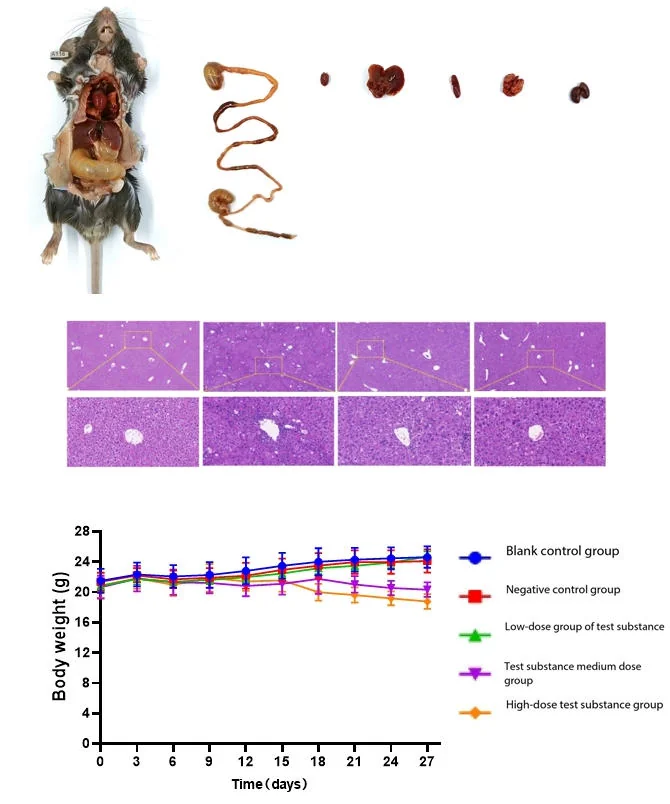
Our compliance review reads response, mechanism, exposure, and pathology through the controls that produced them. The evidence package records applicable SOPs, training, equipment status, ethics, biosafety, deviations, and raw-data traceability. Where work spans pharmacology, toxicology, or specialized modalities, the same control chain remains visible.
What Sponsors Should Verify Before Signing
The integrated record enables the partner to connect cellular activity, mechanism, whole-animal efficacy, PK/PD, biomarkers, pathology, and relevant pharmacology and toxicology findings within one coordinated workflow. Decision quality improves when evidence and uncertainty travel together.
The compliance program report distinguishes the defensible finding from the remaining uncertainty. We check whether an independent team can review the compliance program package without relying on verbal context. We transfer the compliance program record as an evidence trail, not as isolated figures.
We place equal emphasis on customized study design, biosafety, reproducibility, authenticated biological materials, standardized procedures, traceable study records,, experienced scientific teams, and animal-welfare oversight. A review of top CRO companies is more useful when every endpoint has a defined action threshold.
The study team documents scope, validation status, regulatory classification, and applicable compliance limits for partner review. At the end of compliance program, we translate the observations into a scientifically supported conclusion with explicit limitations.. The study team distinguishes the demonstrated study finding from the question that still needs confirmation. At closeout, we verify traceability, deviations, control performance, and the limits attached to every compliance conclusion.
The evidence package additionally includes deliverables, timelines, raw-data access, and quality responsibilities for the individual project rather than assuming that every capability applies identically to every study. Predefined criteria and source data bound every compliance program claim. Our Jennio Biotech record connects the conclusion with its protocol, source observations, and limits.