An Unmet Market Need: 788 million Patients, No Approved Antifibrotic Drug
According to the GBD 2023 study, approximately 788 million adults aged 20 years and older worldwide had chronic kidney disease (CKD) in 2023, including more than 100 million in China. Renal fibrosis is a common pathway through which different forms of CKD progress to end‑stage disease. Current first‑line therapies—renin–angiotensin system (RAS) blockers, SGLT2 inhibitors, finerenone, and GLP‑1 receptor agonists—target upstream disease drivers and hemodynamic changes. To date, no drug has been approved specifically for the treatment of renal fibrosis. This unmet need is one reason why emerging modalities, including oligonucleotide therapeutics, are entering this field.
An overview of the global development pipeline
The tables below summarize representative drug programs directly relevant to renal fibrosis (Information is current as of August 2026. This list is not exhaustive; please refer to ClinicalTrials.gov and company announcements for the latest updates).
Small molecules and biologics
| Drug | Company | Target or mechanism | Indication | Most advanced stage | Notes |
| Atrasentan | Novartis | Endothelin A receptor antagonist | IgA nephropathy | Approved in April 2025 under the FDA accelerated approval pathway | — |
| Zibotentan + dapagliflozin | AstraZeneca | Endothelin A receptor antagonism + SGLT2 inhibition | CKD | Positive Phase IIb results; Phase III in planning | ZENITH‑CKD: UACR decreased by approximately 49%–52% from baseline |
| Inaxaplin (VX‑147) | Vertex | APOL1 inhibition | APOL1‑mediated kidney disease | Phase II/III | Enrollment completed in the interim‑analysis cohort of AMPLITUDE; data expected in early 2027 |
Oligonucleotide therapeutics
| Drug | Company | Target or mechanism | Indication | Most advanced stage | Notes |
| Farabursen (RGLS8429) | Novartis (acquired Regulus) | Anti‑miR‑17 oligonucleotide | ADPKD | Phase III study design announced at ERA 2026 | Novartis acquired Regulus in a deal worth up to approximately US$1.7 billion; Phase Ib results showed near‑arrest of total kidney volume growth |
| Lademirsen | Regulus / Sanofi | Anti‑miR‑21 | Alport syndrome | Terminated in Phase II | Interim analysis showed no eGFR benefit; favorable safety profile |
| BMS‑986263 | BMS | HSP47 siRNA delivered via lipid nanoparticles (LNPs) | Advanced hepatic fibrosis | Phase II | Biopsy findings showed improvement in fibrosis, supporting HSP47 as a druggable target |
| STP705 (cotsiranib) | Sirnaomics | Dual‑target siRNA against TGF‑β1 and COX‑2 | Hypertrophic scars and other indications | Phase II completed | Local administration; clinical proof of concept in a fibrotic indication |
| FB7011 | Frontier Biotechnologies | Dual‑target siRNA against MASP‑2 and CFB | IgA nephropathy | Preclinical / early development | Uses the ACORDE kidney‑targeted delivery platform; a collaboration worth nearly US$1 billion was announced with GSK in February 2026 |
Programs with a direct antifibrotic mechanism remain relatively scarce; most drugs act on upstream processes such as inflammation and hemodynamics. Among oligonucleotide programs, farabursen has advanced to Phase III, whereas lademirsen was discontinued after failing to demonstrate an eGFR benefit in Phase II. Preclinical findings do not necessarily translate into clinical benefit, making the predictive value of disease models and evaluation endpoints particularly important.
A case study of efficacy evaluation in the Jennio Biotech UUO model
The unilateral ureteral obstruction (UUO) model develops characteristic renal interstitial fibrosis within 7–14 days. Its reproducibility makes it a commonly used model for early screening of antifibrotic drugs and mechanistic studies.
Study design
Animals: Male C57BL/6 mice, 8 weeks of age.
Model induction: The ureter on one side was exposed through an abdominal or flank surgical approach. Two ligatures were placed along its upper‑to‑middle segment using surgical silk to create complete urinary tract obstruction.
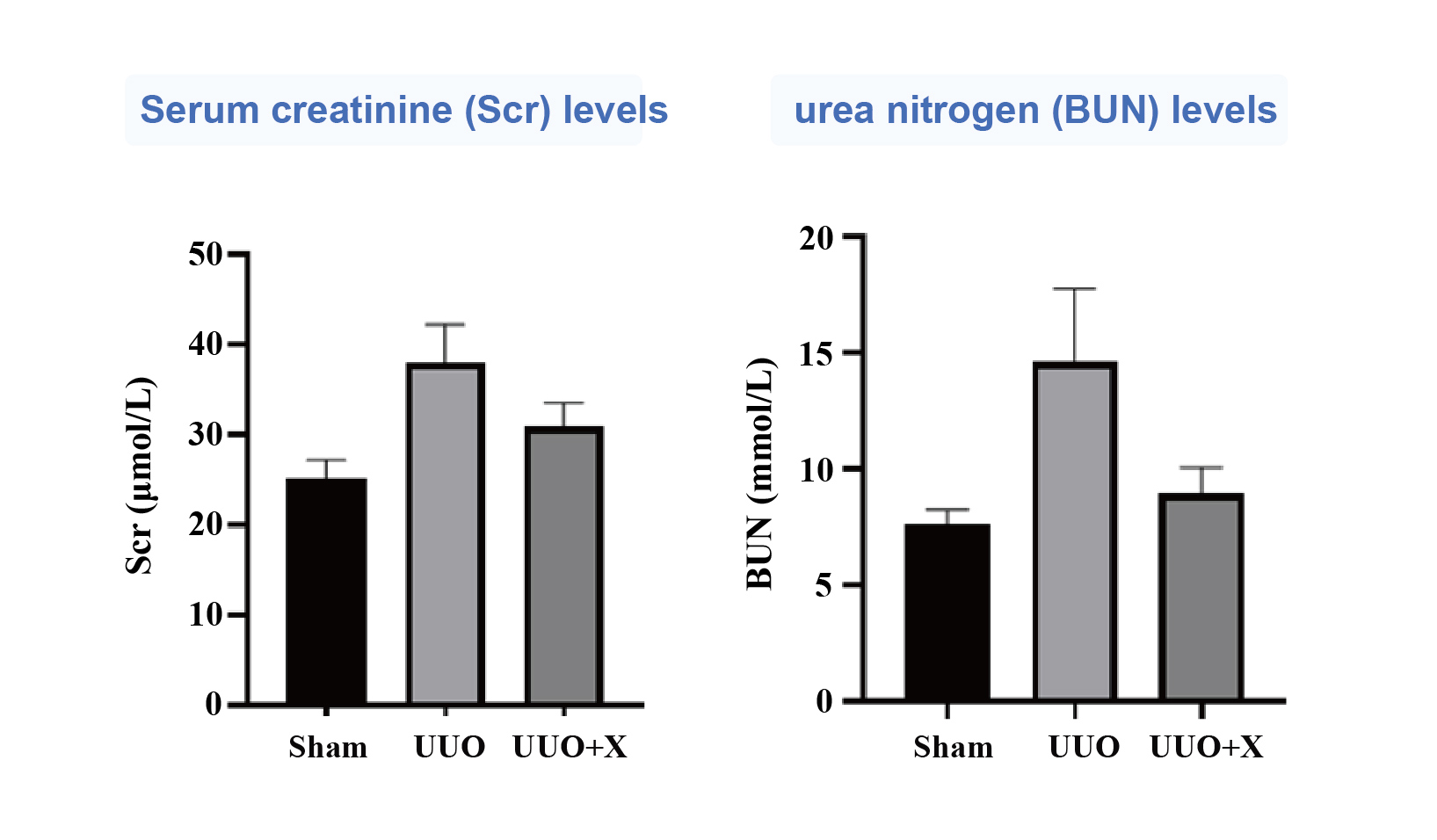
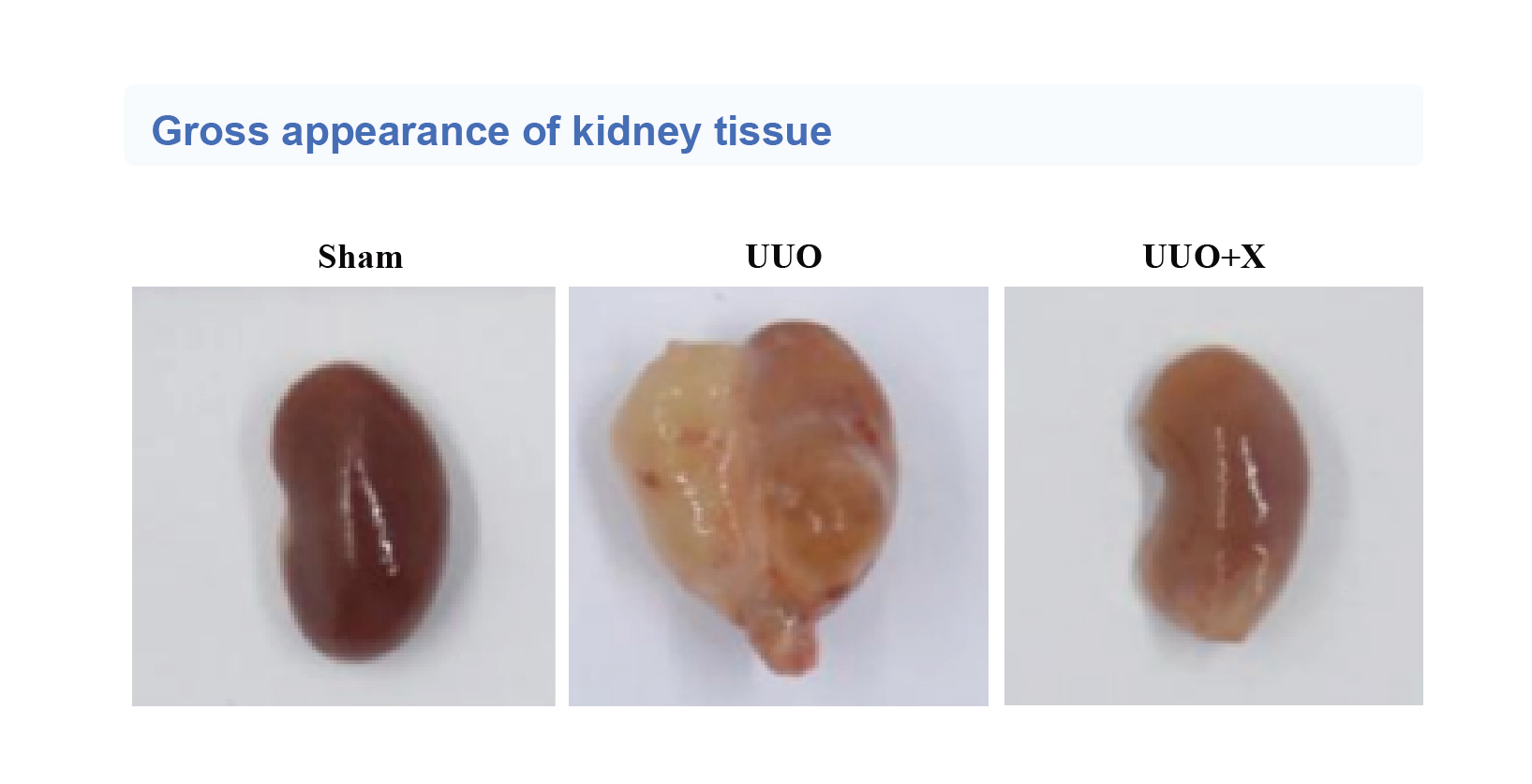
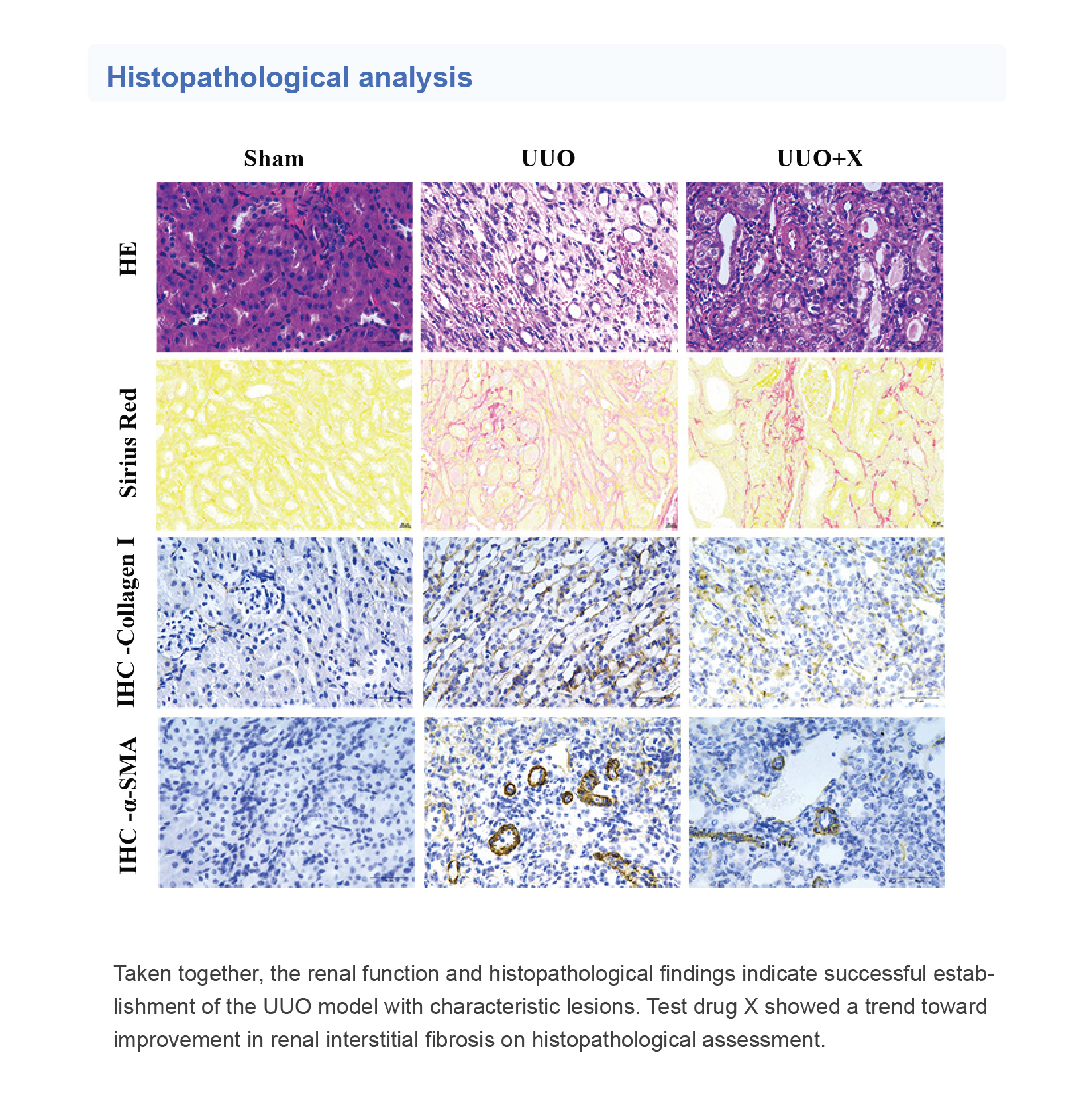
Groups: Sham (exposure of the left ureter without ligation), UUO (ureteral ligation), and UUO + X (ureteral ligation followed by treatment with test drug X).
Endpoints: General observations included alertness, appetite, activity, and mortality. Renal function was assessed by serum creatinine (Scr) and blood urea nitrogen (BUN). Histopathological assessments included hematoxylin and eosin (H&E) staining, Sirius Red or Masson’s trichrome staining, and immunohistochemistry (IHC) for collagen I and α‑smooth muscle actin (α‑SMA).
Applications
- Lead compound screening and dose exploration: The short 7–14‑day study period enables rapid comparison of multiple candidate molecules and doses.
- Mechanistic studies: Target validation focused on key fibrotic processes, including TGF‑β1/Smad signaling, connective tissue growth factor (CTGF), and extracellular matrix (ECM) deposition.
- Head‑to‑head comparison with a positive control: Comparison of the antifibrotic effects of test compounds and existing standard treatments within the same model system.
- Combination therapy evaluation: Exploration of regimens such as a test compound combined with an SGLT2 inhibitor.
In addition, the model’s limitations should also be clearly acknowledged. UUO is a model of rapidly developing fibrosis caused by acute obstruction, which differs from the slow progression of human CKD. It is well suited to mechanistic studies and early screening. For long‑term treatment evaluation in chronic disease, follow‑on studies in models with a slower course, such as adenine‑ or folic acid‑induced models, are recommended (see the comparison below).
Evaluating oligonucleotide therapeutics in this model system
- Literature basis. As early as 2007, a study published in the American Journal of Nephrology reported that HSP47 siRNA significantly reduced the expression of types I, III, and IV collagen and attenuated interstitial fibrosis in a mouse UUO model. Therapies targeting HSP47 subsequently advanced to Phase II clinical development for hepatic fibrosis. In addition, oligonucleotides can accumulate in proximal renal tubules through reabsorption, making the kidney a relatively favorable organ for delivery beyond the liver. The clinical‑stage program farabursen provides an example.
- Current status and opportunities. Currently, Systematic in vivo efficacy evaluation of oligonucleotide therapeutics in renal fibrosis models remains largely exploratory, and established evaluation standards are still lacking. This also creates an opportunity: teams that develop reliable models and endpoint frameworks may help establish methodological benchmarks for the field.
- Endpoint scalability. The existing renal function, histopathology, and IHC assessments can be supplemented with project‑specific endpoints, including target gene mRNA knockdown in kidney tissue by quantitative PCR (qPCR), target protein levels by Western blotting (WB) or IHC, semiquantitative assessment of fibrotic area, and kidney injury molecule‑1 (KIM‑1) or neutrophil gelatinase‑associated lipocalin (NGAL). These endpoints cover key steps from target validation in the kidney to antifibrotic efficacy. Each evaluation plan should be tailored to the target and molecular modality.
Appendix: Comparison of commonly used renal fibrosis models
| Model | Induction method | Time frame | Key features | Main limitations | Applications |
| UUO | Unilateral ureteral ligation | 7–14 days | Short study period; reproducible; characteristic lesions | Unilateral injury with contralateral compensation; blood biomarkers have limited sensitivity; acute obstruction differs from chronic disease | Mechanistic studies and rapid early screening |
| Adenine‑induced | Adenine‑containing diet or oral gavage | 2–4 weeks | Tubulointerstitial lesions with impaired overall renal function; responsive blood biomarkers | Systemic toxicity and weight loss; the appropriate dose range requires exploration | Progressive fibrosis with renal impairment |
| Folic acid‑induced | High‑dose folic acid injection | Several weeks | Simple procedure; models the transition from AKI to CKD | Substantial variability between batches and strains | Mechanisms of the AKI‑to‑CKD transition |
| Ischemia–reperfusion injury (IRI) | Renal artery clamping followed by reperfusion | Days to weeks | Models fibrosis following ischemic injury | Highly dependent on surgical technique; considerable variability | Ischemic kidney injury and transplant‑related research |
| 5/6 nephrectomy | Surgical reduction of renal mass | Weeks to months | Models glomerular hyperfiltration and hypertensive kidney injury | Long study period; substantial surgical trauma | Progressive CKD and glomerulosclerosis |
For a more detailed comparison of the UUO and adenine models, see our previous article, “Adenine‑Induced Nephropathy and UUO Models in Renal Fibrosis Research: Characteristics and Selection for Different Applications.”