
Autoimmune disorders arise when immune tolerance to self-antigens is disrupted, leading to immune responses against the body’s own cells or tissues.. The resulting pathology can involve persistent inflammation, abnormal immune-cell activation, tissue-specific damage, and fluctuating disease activity, making experimental investigation particularly challenging.
Animal models of autoimmune disease provide a controlled biological setting in which researchers can examine how immune abnormalities develop, interact with target tissues, and respond to intervention. Rather than treating autoimmunity as a single process, model selection can reflect the affected organ, immune pathway, disease stage, and research objective. At Jennio Biotech, we use this question-driven perspective to study disease mechanisms and evaluate therapeutic responses within relevant in vivo systems.
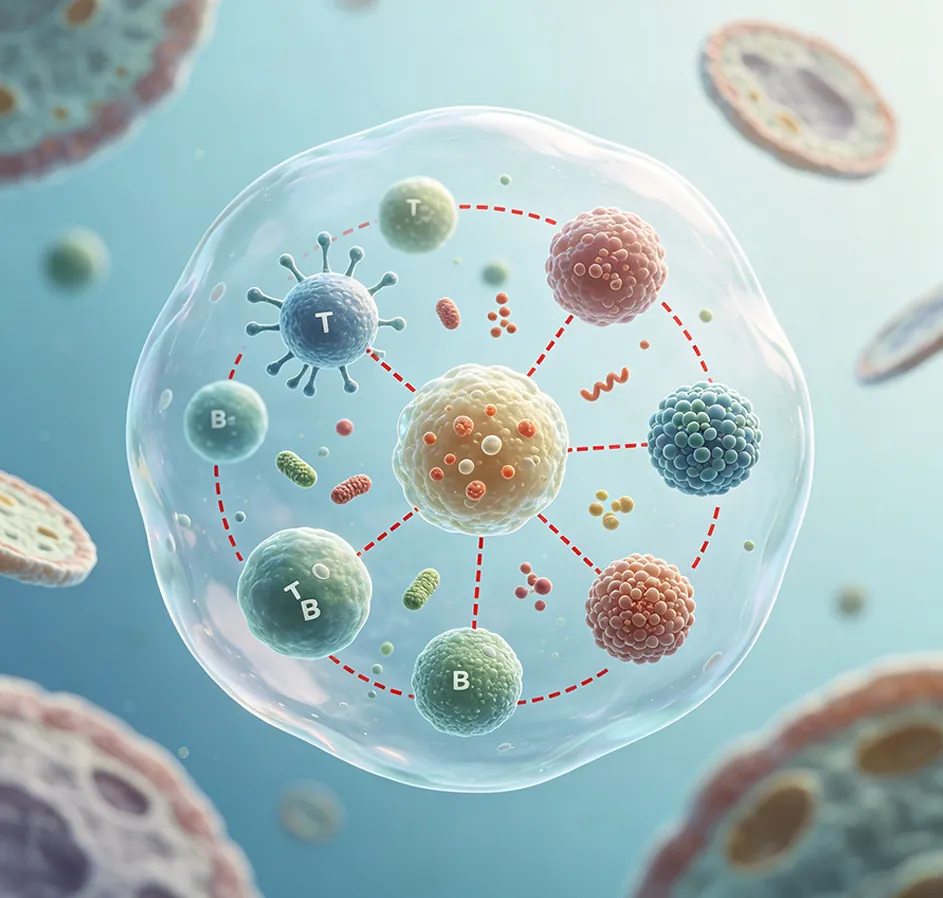
How Autoimmune Disease Models Reproduce Human Pathology
An experimental autoimmune model does not need to reproduce every feature of a human disorder to be scientifically useful. Its value often comes from reproducing a defined component of disease biology, such as autoreactive lymphocyte activation,, inflammatory signaling, autoantibody production, or tissue-specific immune injury. Researchers can then connect those changes with measurable pathological outcomes.
Model development may rely on genetic susceptibility, immunization with disease-relevant antigens, chemical triggers, adoptive transfer of immune cells, or spontaneous disease development.. Each strategy creates a different biological context. Some systems are particularly useful for examining disease initiation, whereas others are better suited to persistent inflammation or tissue destruction.
The resulting phenotype should be interpreted within its known limitations. Species-specific immune pathways, metabolism, receptor expression, and disease progression can differ from human biology. Understanding those differences helps researchers decide which observations are broadly informative and which require additional validation.
Matching Models with Specific Autoimmune Disorders
Rheumatoid arthritis provides an example of a disease in which systemic autoimmunity can contribute to synovial inflammation and progressive joint damage.. Experimental arthritis systems can be assessed through clinical scores, joint swelling, histopathology, inflammatory mediators, and immune-cell changes, creating several layers of evidence rather than relying on one visible symptom.
Psoriasis research provides a related example of immune-mediated inflammation, because skin inflammation involves interactions among keratinocytes, immune cells, cytokines, and local tissue signaling. An appropriate experimental setting should reflect relevant aspects of this network while allowing researchers to monitor changes in lesion development and inflammatory activity.
Inflammatory bowel disease adds further complexity because intestinal barrier function, microbiota, mucosal immunity, and systemic immune regulation can interact. Such differences illustrate why animal models of autoimmune disease should be selected according to the biological question, with related immune-mediated inflammatory models assessed for the specific mechanisms they reproduce.
What Researchers Measure During In Vivo Studies
Disease severity is only one part of an autoimmune study. Histological examination can reveal tissue architecture and inflammatory infiltration, while immunohistochemistry can help identify specific cellular or molecular changes within affected areas. These observations provide context that a numerical disease score alone cannot offer.
Molecular measurements add another layer. Cytokines, chemokines, autoantibodies, gene-expression patterns, and other biomarkers may provide evidence of intervention-related changes in immune pathways. The most informative marker depends on the disease mechanism and the proposed pharmacological target.
Cellular analysis can further clarify how treatment affects immunity. Flow cytometry, for instance, can distinguish major lymphocyte and myeloid populations and examine changes in activation or differentiation states. Combining pathological, molecular, and cellular evidence gives researchers a more nuanced interpretation of therapeutic activity.
Building a More Translational Preclinical Strategy
Species differences remain one of the central difficulties in autoimmune drug development. A compound may differ in target binding or pharmacological activity across species, while disease-associated pathways can vary in activity or biological importance. Such differences need to be considered before efficacy findings are interpreted in relation to human disease.
Study design also influences translational relevance. Dose selection, treatment timing, disease stage, sampling intervals, and endpoint definitions can all alter the observed response. A therapy tested only after severe tissue damage may produce a different profile from the same intervention evaluated during earlier immune activation.
At Jennio Biotech, we work with disease-relevant in vivo systems for conditions such as rheumatoid arthritis, psoriasis, and inflammatory bowel disease. Our evaluation framework can combine efficacy, mechanism-related measurements, and safety observations from model establishment through multidimensional analysis. The goal is to generate a coherent dataset that helps research teams assess candidate compounds at different stages of preclinical development.
Using Models to Guide Drug Development Decisions
A useful autoimmune model does more than produce a treatment-response curve. It can help researchers examine whether a candidate affects the proposed disease pathway, whether pathological changes correspond with molecular findings, and how treatment effects differ across complementary endpoints.
Model selection is also relevant to mechanism-of-action studies. If a compound changes inflammatory mediators without substantially altering tissue pathology, the result may suggest that the selected endpoint or disease stage does not fully capture its activity. Conversely, concordant changes across immune, molecular, and pathological measurements can provide stronger support for the proposed mechanism.
The broader value of animal models of autoimmune disease lies in their ability to connect controlled experimental manipulation with complex biological responses. No single system can represent every aspect of human autoimmunity, but carefully selected models can answer specific questions with greater clarity and provide evidence that complements other preclinical methods.
Conclusion
Autoimmune research requires more than reproducing visible inflammation; it calls for an understanding of how immune regulation, tissue biology, disease progression, and treatment response interact. Different experimental systems can illuminate different stages or mechanisms, while multidimensional analysis helps researchers interpret those findings within their proper context. We at Jennio Biotech apply this principle by combining disease-relevant models with standardized efficacy and mechanistic assessments, giving research teams a structured way to investigate candidate therapies and make better-informed preclinical decisions.