
Immune dysfunction is rarely driven by a single pathway. Autoimmune disease models allow researchers to examine how immune activation, tissue injury, inflammatory signaling, and disease progression interact within a biological system. These models are especially useful when a treatment appears promising in in‑vitro isolated cells but its broader effects remain uncertain.
Our team at Jennio Biotech uses preclinical disease-model research to investigate inflammatory processes from multiple biological perspectives, helping researchers connect molecular mechanisms with measurable disease phenotypes.
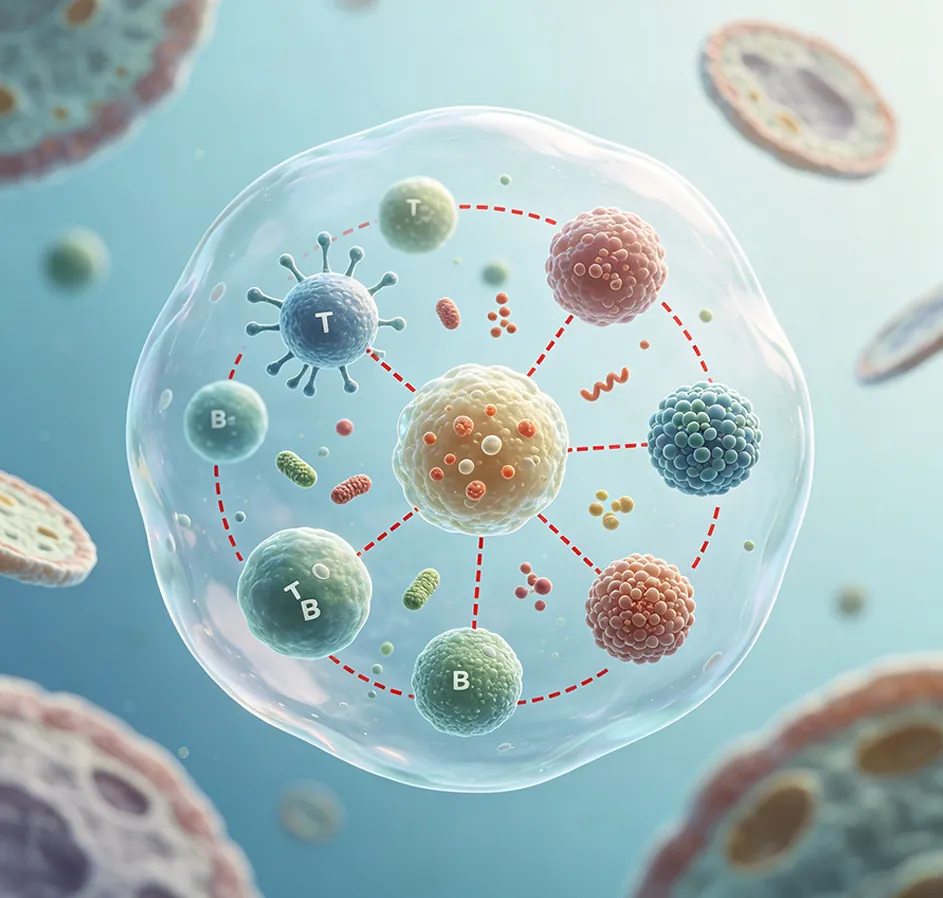
Understanding Immune Dysregulation
Inflammation is a normal protective response. Following infection or tissue injury, immune signals recruit cells and inflammatory mediators that help contain the problem and support tissue repair. The same machinery can become harmful if activation persists after the original trigger has disappeared.
Autoimmune disorders add another layer of complexity because immune responses can become directed toward the body’s own tissues. Depending on the disease, affected organs may include the joints, skin, nervous system, gastrointestinal tract, or other tissues. This diversity means that no single experimental system can fully recapitulateevery autoimmune condition. This limitation underscores the importance of selecting model systems that can capture disease-relevant immune interactions in a dynamic, systemic context.
Animal models provide a setting in which immune cells, target tissues, inflammatory mediators, and systemic responses interact. Such relationships are difficult to reproduce fully with isolated cell cultures, particularly when researchers need to understand how inflammation develops over time.
Linking Mechanisms With Disease Phenotypes
Mechanistic research often begins with a molecular hypothesis. Researchers may investigate cytokines, immune-cell subsets, signaling pathways, autoantibodies, or other factors suspected of contributing to disease progression. However, molecular observations alone cannot establish whether these factors directly drive disease pathology; they must be examined alongside disease-relevant phenotypic changes.
A useful disease model connects those molecular observations with visible or measurable biological changes. Depending on the research question, investigators may examine tissue inflammation, immune-cell infiltration, organ function, pathological changes, or clinical-like disease scores.
Temporal information is equally valuable. Some inflammatory responses appear rapidly, while autoimmune pathology can develop gradually and fluctuate over time. Repeated assessment can reveal whether a treatment changes the onset, severity, persistence, or recurrence of disease-associated responses.
Selecting Models According to Research Goals
Model selection should begin with the biological question rather than the treatment itself. A study focused on inflammatory signaling may require different evidence from one investigating tissue-specific autoimmunity or systemic immune dysfunction.
Researchers should also consider whether the experimental system reflects the relevant immune mechanisms. Some models are driven primarily by innate immune activation, while others involve adaptive immune responses, autoantibodies, or interactions between multiple immune-cell populations.
At Jennio Biotech, we work with inflammatory and autoimmune disease preclinical research systems according to the intended mechanism and study endpoint. Our approach can incorporate disease progression monitoring together with tissue analysis and immune-related assessments, allowing researchers to examine both phenotype and underlying biological changes within the same research framework.
Combining Multiple Analytical Readouts
Disease severity alone may not explain why a treatment produces a particular outcome. Histopathology can reveal cellular and structural changes within affected tissues, while immunohistochemistry can help identify selected markers associated with inflammation or immune activity.
Flow cytometry provides another layer of information by characterizing immune-cell populations. Changes in T-cell, B-cell, macrophage, or other immune subsets may help explain shifts in disease phenotype and clarify whether a treatment affects the intended biological pathway.
Molecular assays can complement these observations. Cytokine measurements, gene-expression analysis, and related biochemical assessments may reveal inflammatory signals that are not apparent from tissue morphology alone. Using several compatible readouts can create a more informative picture of treatment response without relying on one endpoint.
Supporting Drug Development and Mechanistic Studies
The value of a disease model extends beyond determining whether a treatment appears effective. Researchers can use experimental systems to investigate dose-response relationships, treatment timing, mechanism of action, and potential differences between therapeutic strategies.
Combination studies may also benefit from disease-model research. An anti-inflammatory agent, immune-modulating therapy, or targeted treatment can be evaluated alongside another intervention when researchers need to understand whether their effects overlap or complement one another.
Interpretation remains essential because no animal model reproduces human autoimmune disease in every detail. Differences in immune biology, genetics, disease heterogeneity, and treatment exposure can influence how findings translate to clinical research. Model data are most useful when their limitations are recognized alongside their strengths.
Conclusion
The importance of autoimmune disease models lies in their ability to connect immune mechanisms with disease-level changes that cannot always be observed through isolated assays. They give researchers an experimental setting in which inflammation, immune-cell behavior, tissue injury, and therapeutic response can be examined together.
We at Jennio Biotech structure inflammatory and autoimmune research around the specific biological questions of each project, combining disease phenotypes with histological, cellular, and molecular evidence where appropriate. Such a measured approach can provide a stronger scientific basis for understanding immune dysfunction and evaluating potential therapeutic strategies.